Contents
How Microtraumas can change who you think you are
In life, a constant stream of microaggressions – of disagreements, and being corrected, told to change our thinking or behaviour – tend to cause microtraumas, which, ultimately are micro-rejections of the individuals true self. This has the long-term impact of slowly increasing their inner distress, while at the same time, applying micro-conditioning to the individual.
This progresses, baby-step, by baby step, leading that individual further away from their natural harmonic self. Instead they are trained, or, groomed into the discordant world of those that no longer recognise that original core-self.
Due to the normalising of that toxicity within society, via attitudes that encourage that individual to ignore those boundary incursions. These people end up masking that distress, and also, passing it on to others, as a form of negative relief.
From Microaggressions to Microtraumas
We can see this behaviour observed in a number of theoretical models, including Minority Stress Theory, Stress & Coping, Allostatic Load
Minority Stress Theory (Meyer): Argues that people in stigmatised groups face chronic, identity‑based stressors (discrimination, microaggressions, vigilance) above and beyond everyday stress. This extra load predicts higher rates of depression, anxiety, substance use, and suicidality than in non‑stigmatised groups.
This shows that anyone that is the target of such microaggressions with tend to have a higher toxic load, and therefore suggests agreement with the notion that microaggression can be a significant cause of mental stress.
Systematic reviews of microaggressions toward sexual and gender minority and racial minority groups show consistent associations with depression, anxiety, and other symptoms, even when controlling for major life events. The important point: frequency (i.e., cumulative exposure) matters, not just single “big” events.
Mechanism: repeated low‑level assaults on belonging and safety keep the stress system “on” (hypervigilance, rumination), contributing to allostatic load (wear‑and‑tear on stress systems). Over time, this produces what you call “microtraumas”: not necessarily single-incident PTSD, but chronic dysregulation and symptomatology.
Microtraumas as Micro‑Rejections of the “True Self”
Theories: Self‑Discrepancy Theory, Identity‑Based Trauma, Internalised Stigma
Your idea that each microaggression is a “micro‑rejection of the true self” fits with:
Self‑discrepancy theory: Posits that distress arises when there is a gap between the actual self and the “ought” or “ideal” self imposed by others. Repeated signals that “your actual self is not acceptable” enlarge this gap, producing shame, anxiety, and depression.
Work on identity‑related trauma shows that events undermining a core identity (e.g., being repeatedly mocked for race, sexuality, or disability) can disrupt the sense of self, leading to negative self‑concept and feelings of alienation from one’s prior identity.
Internalised stigma / internalised prejudice: models of internalised racism, homophobia and other prejudices describe a process where external negative messages about one’s group are taken into the self‑concept (“people like me are inferior”), which is empirically linked to lower self‑worth and more psychopathology.
Mechanism: Each “small” message (“you’re not really from here,” “that’s not how we do things,” jokes about identity) is interpreted as evidence that “who I am is wrong/less than.” The more frequent the messages, the more the person’s internal model of self shifts toward that devalued view.
Persistent jibes, being the “butt” of the joke, all these things add up to an unwitting, but no less effective form of persistent and pervasive social control.
Micro‑Conditioning: Step‑by‑Step Movement Away from the Authentic Self
Operant Conditioning, Social Learning and Identity Shifting theoretical models show how this ongoing and dynamic process can fundamentally change how you present yourself to others and behave.
We describe a “baby‑step, by baby‑step” conditioning of the individual away from the harmonic , core-self. Three strands of work speak directly to this:
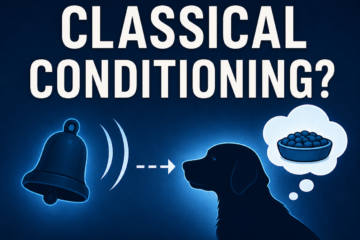
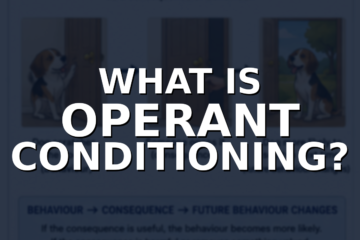
Classical and operant conditioning: Expression of authentic traits (accent, clothing, emotional style, values) is met with micro‑punishments (eye‑rolls, exclusion, teasing). This leads to Masking or conforming behaviours are met with micro‑rewards (acceptance, inclusion, less conflict). Over time, authentic expression is conditioned as unsafe/aversive, and masked behaviour is conditioned as safer.
Identity “shifting” and camouflage: Research on multiracial and queer individuals shows that many strategically alter how they present (language, mannerisms, disclosure) to avoid microaggressions. This “shifting” is associated with increased stress and mental health problems, precisely because it pulls them away from their preferred identity expression.
Self‑alienation: Work on self‑alienation describes how chronic relational invalidation leads people to disown aspects of their experience to maintain attachment or safety, leading to a sense of “this isn’t really me”. That is essentially our “further away from the natural, harmonic self.”
The mechanism being used here is the repeated micro‑punishment of authenticity plus micro‑reward of conformity gradually re‑weights the behavioural repertoire. The person learns: “If I show this part of me, I get hurt; if I hide it, I am safer.” That is literal behavioural conditioning layered onto identity formation.
“Discordant Selves” and Masked Distress
Supporting Theories: Self‑Concept Clarity, Self‑Alienation, Identity in Cognitive Behavioural Therapy.
Self‑concept clarity, suggests that how clear, coherent, and stable one’s sense of self is, is inversely associated with trauma exposure and chronic invalidation; lower clarity predicts more anxiety, depression, and dissociation.
Qualitative work on identity after trauma and moral injury describes people saying “I don’t recognise myself anymore” or “I’m living someone else’s life,” which is very close to our notion of a “discordant world” where the original core‑self is not recognised.
Contemporary CBT papers explicitly argue that identity is a “neglected construct” in cognitive‑behavioural models and show that identity‑threatening events (like chronic marginalisation) shape core beliefs (“I am bad/weak/unsafe”) that drive symptoms.
The Mechanism is this: If I must habitually override my spontaneous preferences, values, and emotions to stay safe or accepted, I learn to distrust my own inner signals. That produces self‑alienation (feeling cut off from one’s inner life) and self‑concept instability, which are robustly linked to distress.
Passing It On: Negative Relief and “Downward” Microaggressions
Supporting Theories: Displaced Aggression, Social Learning, Internalised Oppression
This step of the process – people passing on microaggressions as “negative relief”—lines up with:
Displaced aggression: anger and humiliation that cannot safely be directed at the true source (e.g., systemic prejudice) is redirected toward safer targets (often lower‑status others or members of one’s own group).
Internalised oppression > horizontal hostility: people who have absorbed negative beliefs about their group sometimes enforce those same norms on peers (e.g., policing language, gender expression) to align with the dominant standard and reduce their own anxiety about standing out, thereby running the risk of the escalation of the targeting.
Social learning: Posits that environments saturated with microaggressions teach by example. Observers learn that this is “how we talk” or “how we keep the hierarchy,” and may adopt similar behaviours, especially if they see perpetrators rewarded or unpunished.
The mechanism used here, is that by acting out the same patterns on others momentarily shifts a person from target to (apparent) in‑group enforcer, giving short‑term relief from vulnerability or shame. This matches our “negative relief”: the behaviour regulates their own distress but sustains the wider pattern.
Blaming, Shaming, Scapegoating, and gaslighting, then, all need to be seen in the context of this microaggressive and all pervasive framework. Where authenticity pruning of one person becomes transferred to another, in the form of an equivalent microaggression, and subsequent trauma, self-pruning, recognition of increased distress, which is then transferred, via projection, to someone else.
We can here, then
Summary
If we map our narrative to the literature step‑by‑step:
- Microaggressions > cumulative distress – supported by minority stress research and multiple systematic reviews.
- Cumulative distress > identity threat / rejection of self – supported by self‑discrepancy, identity‑based trauma, internalised stigma and negative self‑concept findings.
- Identity threat + conditioning > movement away from authentic self – supported by work on shifting, concealment, self‑alienation, and conditioning of behaviour under stigma.
- Alienation + chronic strain > masked distress and symptomatology – supported by self‑concept clarity and identity‑focused CBT research.
- Masked distress > transmission to others – supported by displaced aggression, social learning, and internalised oppression models.
Each link in our chain has clear, evidence‑based analogues in current theory and data; the model is a synthesised pathway that can be unpacked into established mechanisms at each stage.
Distortions and Dissociations
A further development of this observation, is the suggestion that a single microtrauma, creates a cognitive distortion: a slight rejection of a small part of a larger aspect of the core-self.
However, as those micro-rejections add up, then, there will come a point where more than 50% of that core-function collection has become compartmentalised via a schema mask, and is no longer visible to the conscious awareness. Then, we can suggest, that this self-aspect will completely dissociate, and will sink into the shadow of the unconscious mind
The process we describe here, is not standard terminology, but it lines up with several well‑developed ideas in cognitive,schema, and trauma theory. It helps to translate our terms into those frameworks and then follow the chain step by step.
Microtraumas and Cognitive Distortions
A “microtrauma” in our sense maps well to small, repeated stressors that challenge core beliefs about self, others, and the world, especially when they are identity‑relevant. Research on microaggressions and minority stress shows that such events predict increases in depressive and anxious thinking patterns, including catastrophising, overgeneralisation, and self‑blame – classic cognitive distortions. Each incident does not usually create an entirely new distortion; rather, it nudges existing core beliefs slightly in a more negative direction (e.g., from “I’m okay” toward “maybe something is wrong with me?”).
Schemas, “Masks,” and Compartmentalisation
Cognitive and schema therapy describe schemas as stable mental structures that organise experience and hold our concepts of self, including processes and functions originated from our genetic base: core templates like “I am unlovable,” “People cannot be trusted,” or “I must please others to be safe”. When repeated microtraumas target the same domain (e.g., worth, belonging), the relevant schema strengthens and becomes more automatised. At the same time, discrepant experiences (“I feel confident,” “I like this about myself”) may become compartmentalised, or isolated, to reduce internal conflict.
This is close to what we call a “schema mask”, or “overlaid filter”: an organised but defensive self‑presentation (e.g., compliant, invulnerable, hyper‑competent) that covers over disallowed aspects of the core self. Research on self‑concept clarity and trauma shows that chronic invalidation and identity threats are associated with lower clarity, more internal fragmentation, and increased use of defensive self‑presentations.
From Fragmentation to Structural Dissociation
The idea that, past a certain point, an aspect of self “drops below awareness” aligns with dissociation models in trauma psychology. Structural dissociation theory proposes that repeated, overwhelming or identity‑threatening experiences can lead to a division between:
- An apparently normal part (ANP), which manages daily functioning and often aligns with the “mask,” and
- An emotional part (EP), which holds traumatic memories, impulses, and emotions that are avoided in consciousness.
While our “>50%” threshold is metaphorical rather than empirically fixed, the qualitative shift that we describe – where previously accessible self‑aspects become inaccessible, is consistent with how structural dissociation is described: defensive avoidance consolidates to the point where certain memories, feelings, or identity states are no longer willingly or easily available to conscious awareness.
We can also, now, start thinking of this process, in terms of parts working approaches and also psychoanalytic theory.
Shadow, Repression, and the Unconscious
Our language in regard to the self‑aspect “sinking into the shadow of the unconscious” resonates with parts working approaches such as Internal Family Systems, and psychodynamic and Jungian ideas:
Repression / defensive exclusion: psychodynamic theory holds that painful or conflict‑laden material (wishes, memories, self‑images) can be kept out of awareness to protect the ego. Over time, this material operates indirectly – through symptoms, slips, and relational patterns, rather than as conscious content.
Shadow in Jungian terms is the collection of disowned traits, emotions, and potentials that conflict with the conscious self‑image. Long‑term invalidation and shame can push more of the core self into this “shadow,” producing the subjective sense that the person is living as a façade rather than a whole self.
Hidden or undiscovered parts: Parts working approaches tend to visualise that there are hidden parts, and also, parts with hidden motives and drivers. This equates well with our concept of distortions, causing parts to have “grey areas” to their thinking, and that it is therefore highly likely that at some point, so much of that authentic part has been rejected, and the internal connection, or interface, is not longer able to work at all, and that is a dissociation.
Empirically, this shows up as self‑alienation (feeling cut off from one’s own feelings/values), dissociative symptoms, and identity disturbance – all of which are elevated in people with histories of chronic invalidation and trauma.
How our Model Fits the Science
Putting it in mainstream terms, our proposal can be rephrased as:
- Repeated, identity‑threatening microevents promote negative core schemas and cognitive distortions, especially around worth and belonging.
- To reduce conflict between these schemas and the original, more positive self‑experience, the person increasingly relies on defensive self‑presentations and compartmentalisation.
- Beyond a certain (non‑fixed) degree of fragmentation, significant self‑aspects become functionally dissociated – they are not just “downplayed,” but are avoided or inaccessible in ordinary awareness, aligning with models of structural dissociation and self‑alienation.
- These disowned aspects form something akin to a shadow system of traits, feelings, and memories that continue to act on behaviour from outside conscious control, consistent with long‑standing psychodynamic concepts of the unconscious.
The Dissociated Self
Let me now also suggest that our observation in regard to an individual self-aspect schema, is transferable to the larger, self-concept schema, which also includes all physical aspects of oneself.
In other words, that if more than 50% of the individuals original and authentic self-concept is dissociated. That this means that the collective dissociated self that sits in the shadow, is now in control of that individual. We suggest that this is sometimes called, being “possessed”.
Although, in mainstream psychology, there is no accepted “50% threshold” or literal notion that the “shadow” takes control, what we are pointing to has clear parallels in research on identity disturbance, dissociation, and loss of self‑control. Several strands of evidence help unpack our idea in scientific terms.
Self‑concept, fragmentation, and loss of control
The self‑concept includes both psychological traits (“I am kind / worthless / competent”) and physical aspects (body image, gendered embodiment, etc.), this also includes all autonomic functions, methods, self-regulation and every piece of biological logic that allows for all of our bodily systems to work without our conscious supervision.
When trauma, chronic invalidation, or microaggressions repeatedly attack core elements of this self‑concept, studies show three things tend to increase together:
- Negative self‑concept (global beliefs like “I am bad / broken”).
- Identity disturbance / instability (frequent shifts in how one sees oneself).
- Self‑alienation and dissociation (feeling unreal, watching oneself from outside, acting “out of character”).
These features are strongly associated with difficulties in self‑control: more impulsivity, self‑harm, risky behaviour, or “acting like a different person” under stress. That is close to your idea that once enough of the original, coherent self‑concept is fragmented and pushed out of awareness, behaviour is driven by disowned, dysregulated parts of the self.
“Possession” as a metaphor vs clinical constructs
What you call “possessed” maps onto several recognised phenomena:
Dissociative parts / structural dissociation – Trauma models describe “apparently normal” parts that manage daily life and “emotional” parts that carry traumatic affect and impulses; when these emotional parts dominate, people may feel taken over by states they cannot easily control. We suggest this is a symptom of ongoing loss of self-control, to the shadow.
Identity disturbance and state shifts – In conditions like borderline personality organisation or complex PTSD, people can move rapidly between incompatible self‑states (e.g., “I am powerful and invulnerable” vs “I am worthless and doomed”), and later say “I don’t recognise who I was in that moment”. Here, we see that as the individual has increased their level of dissociation, then the interruption to self-control increases, individuals will lose confidence in their ability to trust themselves. They may start to have feelings of leaving their body. Hallucinations, controlled by those shadow aspects may start to be seen.
Devastating Dissociation “possessions” and body sharing phenomena – Cross‑cultural and transcultural psychiatry recognise a “possession‑form” of dissociation, where individuals report being controlled by an external being or force. Research often interprets this as culturally shaped language for dissociative state shifts and trauma‑related parts of self, rather than literal external control. In addition, we are aware of Dissociative disorders, including Dissociative Identity Disorder, and Functional Neurological Disorder (FND).
If you read our simple explanation of voices, then the mechanism for this may become more clear.
In all of these, what appears subjectively as an “alien” or “possessing” force can often be understood as a disowned or dissociated part of the person’s own psyche – what we are calling the “collective dissociated self in the shadow”, is a temporarily dominating experience and action.
Whole‑self level: extending from aspects to global identity
Our extrapolation of dissociation from a single self‑aspect to the entire self‑concept is conceptually consistent with current models:
-
When local self‑aspects (e.g., “creative,” “sensual,” “angry” parts) are repeatedly shamed or punished, they may be split off into the shadow or relegated to specific dissociative states.
-
If this process generalises widely – covering body, emotions, sexuality, agency, etc., the person’s available “conscious” identity narrows to a rigid mask (e.g., only “dutiful,” “rational,” “pleasing”), while large portions of the original repertoire are held in dissociated or avoided systems.
-
In that configuration, behaviour under stress is often driven by those disowned systems (rage, compulsions, self‑attack, numbing), which feels, both to the person and to observers, as though “something else” is in control.
So while the language of “>50%” is a metaphorical suggestion, rather than empirical, the underlying claim; that extensive dissociation and identity fragmentation can leave someone largely governed by disowned, poorly integrated parts of self, is very much in line with contemporary work on trauma, identity, and dissociative processes.
Further Reading
https://pmc.ncbi.nlm.nih.gov/articles/PMC10920440/
https://pmc.ncbi.nlm.nih.gov/articles/PMC12180350/
https://www.sciencedirect.com/science/article/pii/S0005791622000866
https://www.softmindindia.com/Blog/Shattered-Self-Traumatic-Experiences-and-Our-Sense-of-Identity
https://pmc.ncbi.nlm.nih.gov/articles/PMC7722011/
https://pmc.ncbi.nlm.nih.gov/articles/PMC10371219/
https://www.liebertpub.com/doi/10.1089/lgbt.2023.0032
https://www.sciencedirect.com/science/article/pii/S0005791622000866
https://pmc.ncbi.nlm.nih.gov/articles/PMC10920440/
https://www.softmindindia.com/Blog/Shattered-Self-Traumatic-Experiences-and-Our-Sense-of-Identity
https://www.talkspace.com/blog/minority-stress-model/
https://academic.oup.com/book/24676/chapter/188080253
https://www.liebertpub.com/doi/10.1089/lgbt.2023.0032
https://journals.sagepub.com/doi/10.1177/10901981241254068
https://pmc.ncbi.nlm.nih.gov/articles/PMC10371219/
https://pmc.ncbi.nlm.nih.gov/articles/PMC5342632/
https://pmc.ncbi.nlm.nih.gov/articles/PMC7722011/
https://pmc.ncbi.nlm.nih.gov/articles/PMC10920440/
https://www.softmindindia.com/Blog/Shattered-Self-Traumatic-Experiences-and-Our-Sense-of-Identity
https://pmc.ncbi.nlm.nih.gov/articles/PMC12180350/
https://compass.onlinelibrary.wiley.com/doi/10.1111/spc3.12712
https://pmc.ncbi.nlm.nih.gov/articles/PMC6396286/
https://www.sciencedirect.com/science/article/pii/S2666560325000702
https://journals.sagepub.com/doi/10.1177/00110000251335062
https://www.sciencedirect.com/science/article/pii/S0005791622000866
https://pmc.ncbi.nlm.nih.gov/articles/PMC11852149/
https://gexinonline.com/uploads/articles/article-jmhsb-124.pdf