Peak Growth
Peak Growth
This article describes a state of peak growth, or learning, which can be attained as part of an individual’s self-transcendent journey.
This article describes a state of peak growth, or learning, which can be attained as part of an individual’s self-transcendent journey.

The Four Noble Truths are the foundation of Buddhist teachings, offering a framework for understanding suffering and the path to liberation.

This article discusses the concept of Self-Integrity, and how that relates to other concepts of personality and self-awareness.

Jung’s use of the terms “unconscious projections” and “exteriorisations” aligned with his developing theory of autonomous complexes, he said that these were psychological contents that can manifest with apparent independence from conscious control.
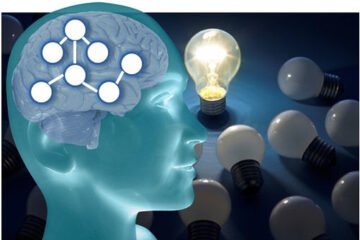
Metacognitive Integration is a dynamic process of exploration, identification, connection AND reconnection of the organismic self with it’s systemwide functions. It is a process that allows the individual to actualise themselves. This optimises the integration of their organism, to allow them to better thrive in the local environment.
You may be surprised to learn that a great many schizophrenia diagnoses in hospitals often occur without comprehensive psychological assessments, relying instead on symptom checklists amid high-stakes inpatient pressures, leading to frequent mislabelling and resulting in misdiagnosis.

Authenticity, I suggest, is a continuum, a spectrum of stages, that may never end, since the self is a largely unknown thing, and that exploration of self, if done with regular determination, is always going to be revealing “new stuff”.

Jung developed his theory of autonomous complexes in 1908, through word association experiments at the Burghölzli psychiatric clinic in Zurich. By measuring subjects’ reaction times to stimulus words and noting hesitations, slips, and emotional reactions, Jung discovered patterns suggesting emotionally-charged “hot spots” in the unconscious.

Almost all children suffer a sustained and often targeted string of traumatic micro, and macro-aggressions, from the moment they are born.

Our Theory of DNA-Self, includes the concept that, due to a small child’s ability to forget upsetting or uncomfortable moments, adults may well find that they actually have two masks. One will be hidden, and highly automated.