Peak Growth
Peak Growth
This article describes a state of peak growth, or learning, which can be attained as part of an individual’s self-transcendent journey.
This article describes a state of peak growth, or learning, which can be attained as part of an individual’s self-transcendent journey.

In this article, we will introduce some of the major psychological theories that have shaped our understanding of human behaviour,

In this article, I will try to flesh out the behaviour that is embodied within the phrase; “an ego-bound” individual. That is, an individual that projects themselves via a mask of false self behaviours, designed to cover up their inner sense of lacking or inability, that hides their secret belief that they are irretrievably broken. The term ego-bound, specifically, refers to someone that has largely “become” that mask, and considers it to be part of their authentic individuality.

In life, a constant stream of microaggressions – of disagreements, and being corrected, told to change our thinking or behaviour – tend to cause microtraumas, which, ultimately are micro-rejections of the individuals true self.

Within parts working, there is the concept of the inner-critic. This is the source of internal self-criticism, and often seen as a source of depression and a pessimistic outlook. In this article, we suggest that this inner critic, was once an inner-supporter, that became rejected and dissociated into take on that oppositional role.

This article discusses the concept of Self-Integrity, and how that relates to other concepts of personality and self-awareness.
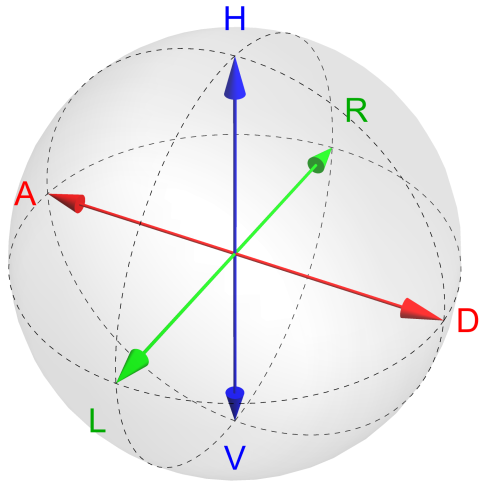
The Bloch sphere emerged from quantum mechanics of spin-1/2 particles (two-level systems like qubits or nuclear spins) in magnetic fields, generalizing classical spin precession to quantum superpositions.

Authenticity, I suggest, is a continuum, a spectrum of stages, that may never end, since the self is a largely unknown thing, and that exploration of self, if done with regular determination, is always going to be revealing “new stuff”.

Jung developed his theory of autonomous complexes in 1908, through word association experiments at the Burghölzli psychiatric clinic in Zurich. By measuring subjects’ reaction times to stimulus words and noting hesitations, slips, and emotional reactions, Jung discovered patterns suggesting emotionally-charged “hot spots” in the unconscious.

This article explores Carl Rogers’ 19 propositions of understanding of human behaviour, each proposition is examined, criticisms explored.