Human Thinking
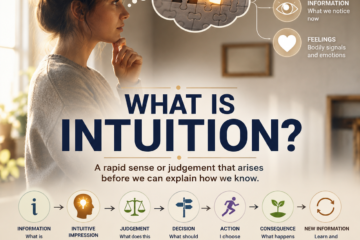
What Is Intuition?
This article introduces the idea of intuition and asks if our intuition can both help and mislead us?
This article introduces the idea of intuition and asks if our intuition can both help and mislead us?
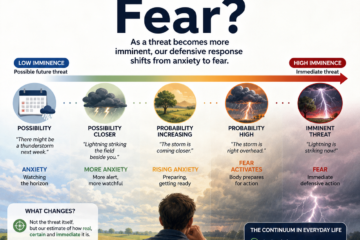
This article explores the relationship between anxiety and fear. It explains how those two emotions work together to form part of a threat feedback loop, in order to inform not just about a particular threat, but also, its imminence.

Jeremy Griffith’s FREEDOM: The End of the Human Condition attempts something much larger than an ordinary theory of personality or psychological disorder. Griffith proposes a biological explanation for what he regards as the central contradiction of human existence.
Objectivity, in this landscape, usually means not a “view from nowhere,” but “as independent of any one person’s quirks as we can practically make it.”

In this article, we will understand the holonomic brain theory and contrast this with the holographic universe theory to see what these theories tell us about everything being connected.

Listening to your body means paying attention to the signals your whole organism is sending, taking them seriously, and responding in a way that keeps you healthy and steady over time

Psychological “flow states” are much easier to enter and sustain when the underlying organismic flow is relatively harmonious and supported.
Human intuition can be understood as a higher‑level, meaning‑rich readout of organismic dynamics, including interoceptive signals from the body.
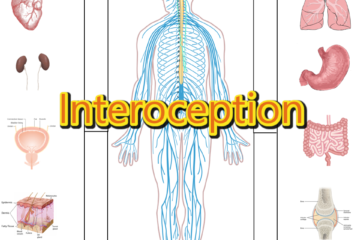
The human organism informs awareness of its needs mainly through internal body signals (interoception) that the brain turns into feelings like hunger, thirst, pain, tiredness, or comfort. These “homeostatic feelings” act as messages about how the body is doing.
The human organism stays in organismic flow by constantly sensing what is going on inside and outside, comparing it to what is “safe or normal,”