Self-integrity
This article discusses the concept of Self-Integrity, and how that relates to other concepts of personality and self-awareness.
The Bloch sphere emerged from quantum mechanics of spin-1/2 particles (two-level systems like qubits or nuclear spins) in magnetic fields, generalizing classical spin precession to quantum superpositions.
Welcome to Training the Ego. This is your simple guide to understanding and becoming the person you want to be – your true self. I’ve tried to make it simple, so that anyone can read and understand it, yet the concepts here are incredibly powerful. And if used correctly, can lead an individual to true self-transcendence, where they have complete mastery of self in all its guises.
Self-awareness is the conscious recognition and understanding of one’s own thoughts, emotions, behaviours, and their underlying patterns, often serving as the foundation for personal growth and therapeutic interventions like Awareness Integration Theory
Metacognitive Integration is a dynamic process of exploration, identification, connection AND reconnection of the organismic self with it’s systemwide functions. It is a process that allows the individual to actualise themselves. This optimises the integration of their organism, to allow them to better thrive in the local environment.
Authenticity, I suggest, is a continuum, a spectrum of stages, that may never end, since the self is a largely unknown thing, and that exploration of self, if done with regular determination, is always going to be revealing “new stuff”.
Jung developed his theory of autonomous complexes in 1908, through word association experiments at the Burghölzli psychiatric clinic in Zurich. By measuring subjects’ reaction times to stimulus words and noting hesitations, slips, and emotional reactions, Jung discovered patterns suggesting emotionally-charged “hot spots” in the unconscious.
This article explores Carl Rogers’ 19 propositions of understanding of human behaviour, each proposition is examined, criticisms explored.
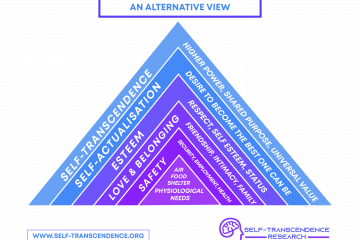
Carl Rogers’ phenomenological theory of personality and behaviour forms the core of his person-centred approach, viewing the individual’s subjective “phenomenal field”, as the primary determinant of behaviour and growth.
Almost all children suffer a sustained and often targeted string of traumatic micro, and macro-aggressions, from the moment they are born.