Existentialism
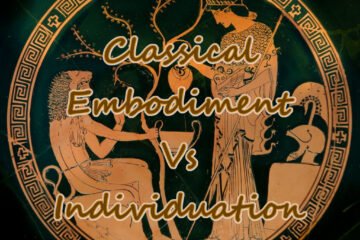
Classical Embodiment Vs Individuation
In Jungian terms, a deep, embodied relationship with a deity‑image could be seen as conscious ego and archetype entering into dialogue
In Jungian terms, a deep, embodied relationship with a deity‑image could be seen as conscious ego and archetype entering into dialogue

In life, a constant stream of microaggressions – of disagreements, and being corrected, told to change our thinking or behaviour – tend to cause microtraumas, which, ultimately are micro-rejections of the individuals true self.

Within parts working, there is the concept of the inner-critic. This is the source of internal self-criticism, and often seen as a source of depression and a pessimistic outlook. In this article, we suggest that this inner critic, was once an inner-supporter, that became rejected and dissociated into take on that oppositional role.

This article discusses the concept of Self-Integrity, and how that relates to other concepts of personality and self-awareness.
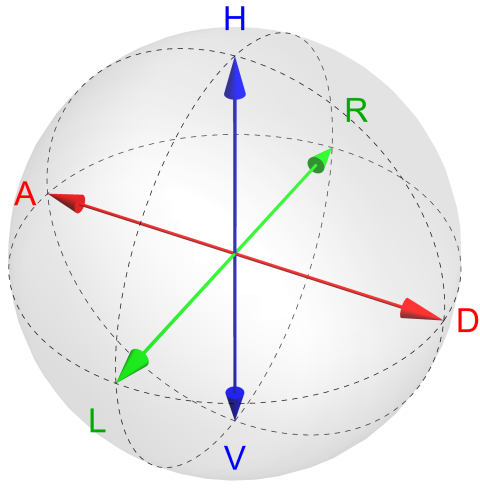
The Bloch sphere emerged from quantum mechanics of spin-1/2 particles (two-level systems like qubits or nuclear spins) in magnetic fields, generalizing classical spin precession to quantum superpositions.

Jung’s use of the terms “unconscious projections” and “exteriorisations” aligned with his developing theory of autonomous complexes, he said that these were psychological contents that can manifest with apparent independence from conscious control.

Welcome to Training the Ego. This is your simple guide to understanding and becoming the person you want to be – your true self. I’ve tried to make it simple, so that anyone can read and understand it, yet the concepts here are incredibly powerful. And if used correctly, can lead an individual to true self-transcendence, where they have complete mastery of self in all its guises.

Authenticity, I suggest, is a continuum, a spectrum of stages, that may never end, since the self is a largely unknown thing, and that exploration of self, if done with regular determination, is always going to be revealing “new stuff”.
Rogers’ phenomenological theory complements DNA-Self Theory by providing a relational framework for reclaiming pruned natural DNA-Originated potentials, but assumes greater accessibility to innate growth drivers than childhood chronic trauma may allow ,ost people to access.

Jung developed his theory of autonomous complexes in 1908, through word association experiments at the Burghölzli psychiatric clinic in Zurich. By measuring subjects’ reaction times to stimulus words and noting hesitations, slips, and emotional reactions, Jung discovered patterns suggesting emotionally-charged “hot spots” in the unconscious.