Psychological theories
In this article, we will introduce some of the major psychological theories that have shaped our understanding of human behaviour,
Rogers’ phenomenological theory complements DNA-Self Theory by providing a relational framework for reclaiming pruned natural DNA-Originated potentials, but assumes greater accessibility to innate growth drivers than childhood chronic trauma may allow ,ost people to access.
Jung developed his theory of autonomous complexes in 1908, through word association experiments at the Burghölzli psychiatric clinic in Zurich. By measuring subjects’ reaction times to stimulus words and noting hesitations, slips, and emotional reactions, Jung discovered patterns suggesting emotionally-charged “hot spots” in the unconscious.
Almost all children suffer a sustained and often targeted string of traumatic micro, and macro-aggressions, from the moment they are born.
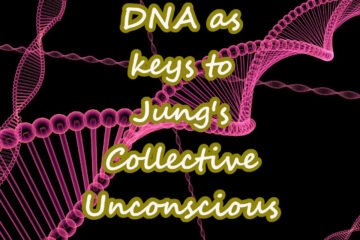
It could be suggested, that in some way, our “cells” are connected via quantum entanglement, and this unseen and highly symbolic communication, is the source of Jung’s collective unconscious, which is also quietly, updating our codes?
Quantum biology is the study of how quantum mechanical phenomena; coherence, entanglement, tunnelling, and superposition, operate in living biological systems and influence biological function. It bridges the gap between the quantum world of atoms and subatomic particles and the classical biological world we observe macroscopically.
The DNA-Self theory proposes that each new-born enters the world with a pre-populated schema network, this is a complete developmental blueprint encoded in genetic material, shaped by prenatal environment, containing latent traits, skills, and associated needs awaiting activation through exploration.
Pattern recognition is not just a cognitive process; it is the brain’s way of saying, “Hey, I’ve seen this before – probably!”. At its core, every pattern is symbolic, and every symbol is a pattern, whether it’s a face in a crowd, a melody from a few notes, or the uncanny resemblance between your boss and a grumpy badger.
In the Coping Paradox, the paradox lies in the fact that coping is both necessary for resilience and, when unmanaged, a source of vulnerability.