Contents
Defence Strategies
Defence strategies are often a form of maladaptive coping response, aimed at pushing a childhood self-blame onto others. Usually, this proactive form of defence does not directly address this blame itself, but rather, uses something seemingly unrelated as the focus-point of that blame:
“you make one slip-up, and before you know it, every wrong that ever happened is down to you!”
Once the targeted-individual has “accepted”, that blame, even without any tacit confirmation, then the “blamer” will want others to share in their blaming, and will want to find other things to blame on that other, innocent victim.
This is one of a number of defense mechanisms that people use to avoid admitting to their inner-pain, and we can look at it in detail to understand how such mechanisms work.
In this case, the one targeting others to blame, attempts to manage their own unbearable, and highly uncomfortable feelings, which are often rooted in childhood self‑blame, by pushing them outward onto others, sometimes through apparently unrelated blame.[1][2]
It is as though they had convinced themselves, that by constantly finding someone else to blame, they do not need to look at their own inner blame and shame, and also, they know that the world is filled with other bullies, who are also very needy of people to blame. This way avoids them becoming the target.
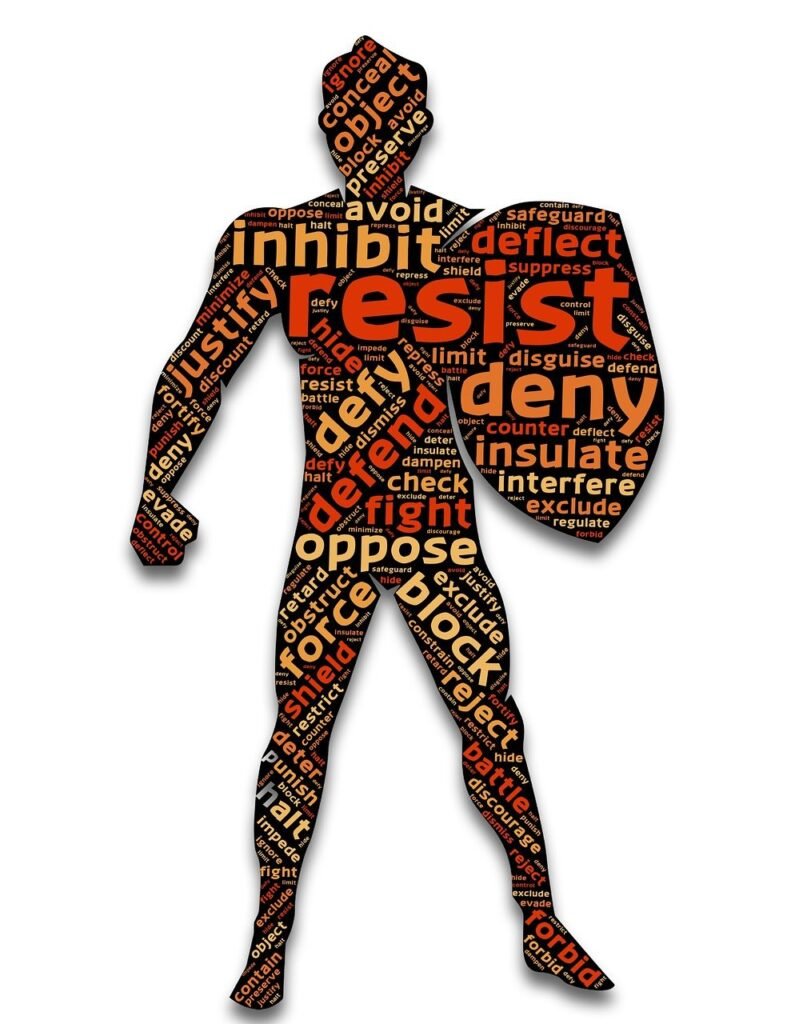
What defense mechanisms are
In psychodynamic terms, defense mechanisms are largely unconscious mental strategies used to protect a person from anxiety, shame, or inner conflict. They often distort or redirect reality just enough to make their unbearable feelings, more tolerable in the short term.[3][2]
Common examples include:
“Projection”: Attributing one’s own unwanted feelings or traits to someone else (“you’re so selfish”) rather than feeling them as “mine.”[4][3]
“Displacement”: Redirecting emotions from the real source to a safer target (angry with a parent, snapping at a partner).[5][6]
“Externalizing / other‑blame”: Explaining pain or shame by locating the cause entirely in other people or circumstances.[7][8]
These “work” short term but are often maladaptive in the long term because they block real processing and repair.[9][10]
Childhood self‑blame underneath
Childhood trauma and chronic invalidation are strongly linked to patterns of self‑blame and internalized “I’m bad / it’s my fault” beliefs. For a child, blaming themselves can feel safer than recognizing that caregivers are neglectful or dangerous, because maintaining a good image of the caregiver preserves attachment and survival.[11][12]
Over time, several things can happen:
- The child grows into an adult with a deep, often unconscious sense of being “the bad one.”[12][11]
- To escape this crushing inner blame, they may flip into external blame, by them projecting that badness outward onto others, and even objects, as a defense.[13][14]
- Because the original wound is old and diffuse, the targets and themes of blame in adulthood can look disconnected from the original hurt.
So that formulation, of maladaptive coping responses aimed at pushing childhood self‑blame onto others, is very consistent with the empirical link between early trauma, self‑blame, immature defenses (like projection), and later psychological distress.[15][13]
How blame can spread and recruit others
Once someone has projected blame onto another person, several dynamics tend to unfold:
“Internal “acceptance” of blame by the target”: Especially if the target already has their own history of self‑blame or low worth, they can absorb this external blame and start to question their own reality: “Maybe I am the problem?”[16][12]
“Externalizing patterns”: Externalizing blame is a recognized cognitive distortion and defense pattern; it allows the blamer to maintain a fragile sense of goodness by locating problems outside.[17][8]
“Seeking validation from others”: To stabilize their defensive narrative, the person will often look for allies who confirm “yes, that other one is at fault.” This social reinforcement helps them keep their own unresolved shame and fear out of awareness.[18][7]
“Finding new things to blame on the same person”: Once someone is cast in the role of “the bad one,” confirmation bias kicks in: the blamer notices and reinterprets new events as further proof. This matches the observation that “they will want to find other things to blame on that other.”[8][7]
In short, what starts as a way to get intolerable self‑blame off one’s own shoulders can turn into a repeating relational pattern of scapegoating and recruitment. This can turn into disorganised, seeming unconnected targeting of an individual until they isolate themselves from that toxicity.
Why calling it “defence” matters
Seeing this as defense, rather than pure malice, does not excuse the harm, but it clarifies the structure:
- The behavior is “about the defender’s inability to face their own pain, shame, or fear”, often rooted in childhood.[15][13]
- The target’s worth or truth is not the real issue; they are being used as a screen for someone else’s unresolved material.[19][4]
That aligns closely with the idea that this defense strategy keeps the old child‑logic alive (“it must be someone’s fault”) but flips it outward. When the target unwittingly accepts the blame and others join in, the defender feels temporarily safer, but at the cost of everyone’s growth.
References and Further Reading