Contents
Peak-Growth Mindset: Rainbow Thinking
This article intends to explain multidimensional, rainbow thinking, versus black and white thinking in decision-making.
Multidimensional, “rainbow thinking” and one-dimensional, black‑and‑white thinking differ most by how many perspectives are included in the thought process behind a decision, and how those perspectives are combined.
Black and white thinking
Black‑and‑white thinking treats choices, people, and outcomes as almost all‑good or all‑bad when decision making. In other words, it is simply a binary, “yes or no”, good or bad type of decision, and the decision maker will tend say “no”, to anything that seems over-complicated.This shows up as:
One viewpoint dominates: “This is either a success or a failure; I’m either capable or useless.”
One move deep: decisions are made based on the immediate, surface impression, with little consideration of what might change.
Fragile predictions: because only a single interpretation is used, if it’s wrong, the whole judgment collapses.
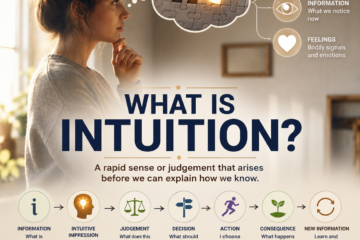
This style feels decisive and is sometimes described incorrectly as ones “gut-feel”, or intuition. But is actually shallow thinking, because it ignores nuance, context, and time.
Multidimensional “rainbow thinking”
Multidimensional rainbow thinking assumes that no single viewpoint captures the whole situation, so it intentionally uses several imperfect views in parallel to build a richer picture.
In practice, that looks like three (or more) distinct viewpoints, for example, when making a decision, you might deliberately ask:
- “What does this look like emotionally—for me and others?”
- “What does this look like practically (resources, constraints, risks)?”
- “What does this look like in terms of values and long‑term growth?”
None of these are perfect, but together they give a rough 3‑D view, much like having three slightly different camera angles on the same scene.
Patterns, not snapshots: Each viewpoint is treated as a pattern: “If I follow this line of thinking, where does it tend to lead?” You’re not just asking, “What do I see now?” but “What is the shape of this pattern over time?”
“Three moves ahead” thinking: As with a chess player, each viewpoint is used to simulate future moves:
- Emotional line: “If I choose this, how will it feel for me and others in a week, in a year?”
- Practical line: “What second‑ and third‑order consequences might this trigger in my schedule, finances, relationships?”
- Values/growth line: “If I keep making this kind of choice, who am I becoming? What kind of person does this train me to be?”
Each line projects several moves ahead. You then compare these “futures” across the views.
Why rainbow thinking leads to better decisions
More accurate picture: Every lens misses something; using several reduces blind spots. The decision is based on an overlapping zone where emotional sense, practical sense, and value‑sense all point to “good enough,” rather than on a single, brittle judgment.
Better prediction: Thinking “three moves ahead” in multiple dimensions makes it easier to see unintended consequences. Instead of “Does this feel right now?” you ask, “What chain of events is this likely to start, from several angles?”
Built‑in flexibility: If reality departs from one viewpoint’s prediction, you still have other patterned views to draw on. This prevents the “my one frame failed, so everything is ruined” collapse that black‑and‑white thinkers often experience.
Black‑and‑white thinking is like staring at a flat photograph and insisting it’s the whole truth. Multidimensional rainbow thinking is like walking around the object with three (or more) cameras, running a few future moves in your head from each angle, and then choosing the line of play that makes the most sense across those overlapping, imperfect views.
Multidimensional thinking lets us pattern match, and the more patterns, the more steps ahead as chess player can think.
Rainbow Thinking and Processing Speed
A persons processing speed is the time that it takes to respond to new information. Science has shown that by moving into less-toxic environments, that processing speed will improve.
I am sure, that in my own case, it was the deliberate removal of my static coping patterns of thought; all those safety checks we need to process, before the content of the moment can be perceived – removing those, freed up my brains processes, in order that I could deepen my level of thinking. I gave myself more time to think.
Therefore, I would expect many people to struggle, initially, to achieve 3D Thinking, in every moment. However, combining these multiple views, as mapped out in our model and Dynamic Reframing guides, will start allowing you to prune those old, static, and often out of date behaviours, into a more dynamic and “in the room”, person.




0 Comments