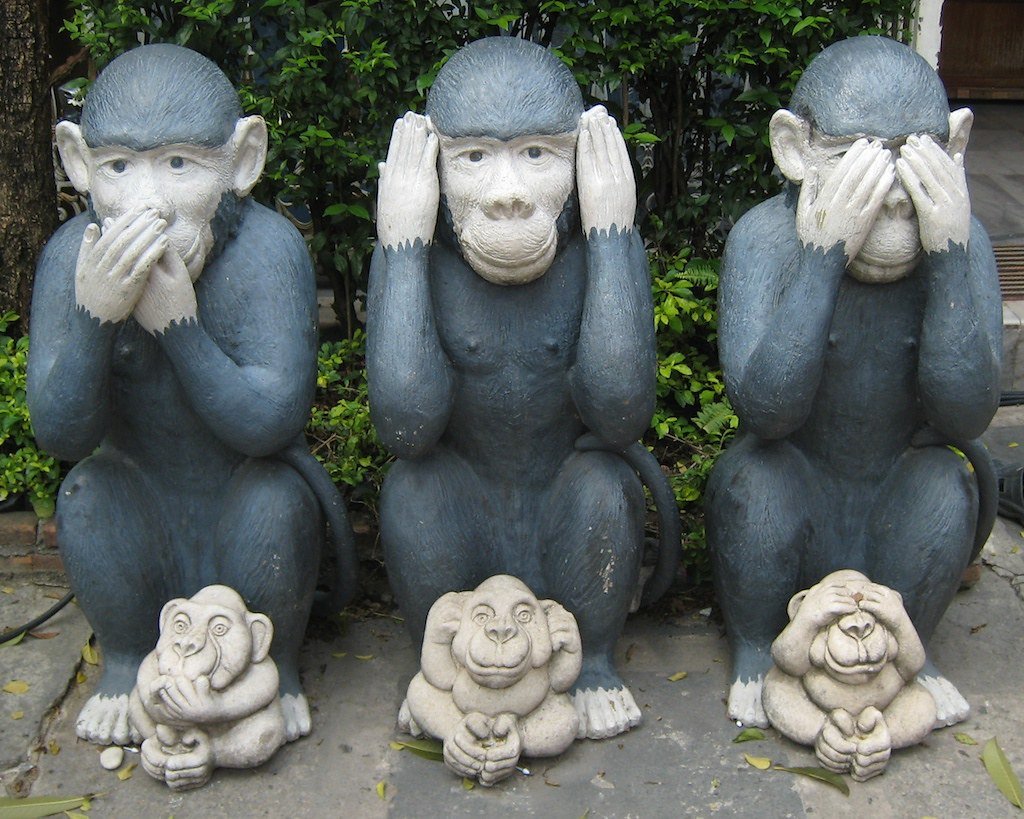
“Wise monkey” by @Doug88888 is licensed under CC BY-NC-SA 2.0
Contents
Wisdom
Wisdom is the ability to apply knowledge, experience, and good judgment to navigate life’s complexities. It goes beyond raw intelligence – wisdom involves understanding human nature, recognising moral principles, and anticipating the long-term consequences of actions.
What Makes Someone Wise
Psychologists have identified several key components that wise people tend to demonstrate:
- Sound judgment – Making thoughtful decisions, especially in difficult or uncertain situations where there is no obvious “right” answer.
- Intellectual humility – Recognising the limits of your own knowledge and being open to the possibility that you might be wrong.
- Emotional regulation – Managing feelings well enough to think clearly and avoid impulsive decisions.
- Considering multiple perspectives – Understanding that other people see things differently and weighing their viewpoints before acting.
- Balance – Weighing personal interests against the interests of others and society when making decisions.
Wisdom is not just about what you think, but how you think. It involves stepping back, reflecting, and applying ethical principles rather than just acting on instinct or feelings.
Two Types of Wisdom
The philosopher Aristotle distinguished between two kinds of wisdom:
- Theoretical wisdom (sophia) – Deep contemplation of universal truths and abstract understanding.
- Practical wisdom (phronesis) – The ability to make sound, ethical decisions in everyday life. This is the kind most relevant to daily choices.
What “Choose Your Friends Wisely” Means
This phrase captures a practical application of wisdom. It means being thoughtful and deliberate about who you let into your life, because friends have a powerful influence on who you become.
The reasoning is straightforward: people tend to adopt the habits, attitudes, and values of those they spend time with. If you surround yourself with wise, honest, and supportive people, you are more likely to grow in those directions. If you spend time with people who are careless, dishonest, or destructive, their influence can pull you down.
Choosing friends wisely involves:
- Looking for character – Seek friends who are honest, loyal, encouraging, and committed to growth.
- Evaluating influence – Ask whether a friendship lifts you up or drags you down over time.
- Accepting change – Recognise that people and circumstances change; it may be wise to create distance from relationships that no longer serve your wellbeing.
- Acting on commitment, not just feelings – Feelings can mislead; wisdom means choosing relationships based on shared values and mutual respect, not just momentary emotion.
In short, this advice asks you to apply the core elements of wisdom; good judgment, long-term thinking, and self-awareness to your social life.
Further Reading
https://en.wikipedia.org/wiki/Wisdom
https://pmc.ncbi.nlm.nih.gov/articles/PMC7138215/
https://pmc.ncbi.nlm.nih.gov/articles/PMC6519134/
https://oecs.mit.edu/pub/wdkwb956
https://wisdomcenter.uchicago.edu/news/wisdom-news/wisdom-isnt-about-what-you-think-how-you-think
https://www.edyoung.com/article/how-do-you-choose-friends-wisely
https://www.linkedin.com/pulse/choose-your-friends-wisely-todd-miller-
https://www.jimandjanean.com/home/2025/2/22/choose-your-friends-wisely
https://websterparishjournal.com/2024/04/09/choose-your-friends-wisely/
https://momwisdomweb.wordpress.com/2018/01/02/why-it-is-important-to-choose-your-friends-wisely/
https://www.tandfonline.com/doi/abs/10.1080/15427609.2011.568847
https://www.emerald.com/ejmbe/article/31/3/367-389/91060
https://www.jstor.org/stable/10.2307/jj.18253133
https://www.cambridge.org/core/product/identifier/S0924933825020218/type/journal_article
https://link.springer.com/10.1007/s10780-012-9158-7
https://www.semanticscholar.org/paper/449dcdd61572fafba38561180d017af6fc5e2576
https://ieeexplore.ieee.org/document/6291031/
https://www.wisdomperiodical.com/index.php/wisdom/article/view/530
https://www.semanticscholar.org/paper/f6fc8240fcc2d9a00c48a8cf689e585e6eb9f869
https://www.dtic.mil/docs/citations/AD1019190
https://pmc.ncbi.nlm.nih.gov/articles/PMC8817649/
https://revistas.pucp.edu.pe/index.php/psicologia/article/download/4571/4550
https://pmc.ncbi.nlm.nih.gov/articles/PMC3896261/
https://journals.sagepub.com/doi/pdf/10.1177/10892680211023063
https://pmc.ncbi.nlm.nih.gov/articles/PMC3698847/
https://www.rjap.psihologietm.ro/Download/rjap192_4.pdf
https://www.psychologytoday.com/gb/basics/wisdom
https://plato.stanford.edu/entries/wisdom/
https://www.ursulastaudinger.com/wp-content/uploads/2017/08/Staudinger-and-Law-Wisdom.pdf
https://www.tandfonline.com/doi/abs/10.1080/00048402.2014.937449
https://www.betterhelp.com/advice/wisdom/exploring-the-psychology-of-wisdom/
https://positivepsychology.com/wisdom/
https://www.chaseoaks.org/articles/choosing-friends-wisely
https://www.facebook.com/groups/520158184663462/posts/24104742095778406/
https://www.youtube.com/shorts/lHvezCqtClY
https://www.instagram.com/p/DQmX-MeEX7f/


0 Comments