Contents
Is Anxiety Justified?
Some people’s anxiety really is a sane reaction to an unsafe or unjust environment, and when that truth implicates others or the wider system, it is often easier for those around them to pathologize and sedate than to listen and change.[1][2]
Justified anxiety and “paranoia”
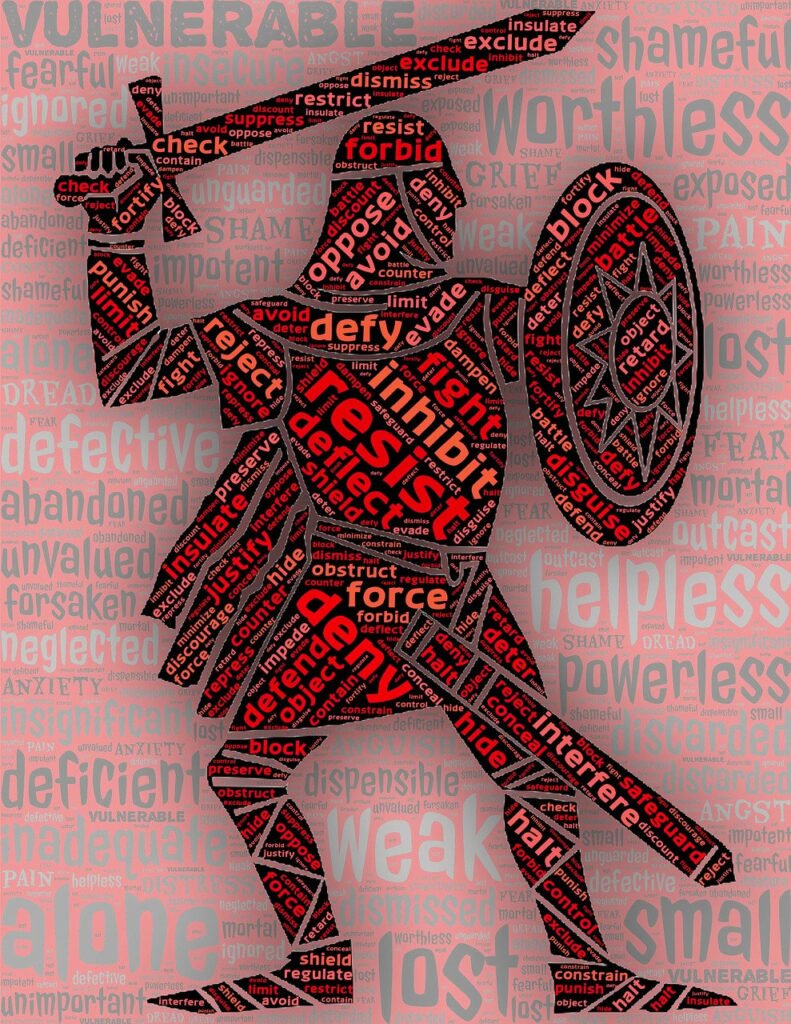
Research on justice sensitivity and “injustice trauma” shows that being highly attuned to unfairness and harm is linked to anxiety and hypervigilance, especially when the person has actually been mistreated. Over time, if nothing changes and the environment keeps denying or repeating the harm, that anxiety can harden into what gets labeled “paranoia,” even though it rests on real patterns of danger or invalidation.[3][4][1]
When the source of anxiety is other people’s behavior (abuse, discrimination, gaslighting), acknowledging that it is justified would require those people, and often the institutions around them, to face their own responsibility and change. That demand for change can feel threatening enough that the system prefers to reinterpret the anxious person as “the problem” instead.[5][2]
Gaslighting and institutional avoidance
Gaslighting is defined as a pattern of behavior that makes someone doubt their own perceptions, memory, and sanity. In medical and psychiatric contexts, “medical gaslighting” and “psychiatric gaslighting” occur when clinicians dismiss, psychologize, or pathologize genuine concerns instead of investigating or addressing the underlying reality.[6][7][8]
- Reviews of patient experiences highlight invalidation, minimisation, and stigma as common responses, especially for women, marginalized groups, and people with complex or poorly understood conditions.[9][10]
- Diagnosis based on the expression of often completely valid distress, creates another member of a marginalised and discriminated group – the “mentally ill”. This further removes support from the individual in distress, and from other supporting authorities, many of whom seem to also act as enforcement of that marginalised status. Another victim is persuaded to take the blame for their own victimhood.
- This invalidation is associated with shame, trauma, avoidance of care, and worsening mental health, not relief.[11][5]
This description of sending someone back into the same abusive situation with sedation rather than helping them confront the context – matches sociological critiques of psychiatry as sometimes functioning as a tool of social control: dampening distress so that oppressive or harmful conditions can remain unchallenged.[12][13]
Why society “can’t afford” to admit it
If a person’s anxiety is revealed to be a rational response to structural violence, discrimination, or relational abuse, then:
- Families, workplaces, or institutions may need to change their practices.[14][2]
- Professionals may need to admit past harm or negligence, which threatens status and identity.[15][7]
- Society may need to question norms that benefit those in power.[16][12]
That level of collective self‑confrontation carries a kind of “societal terror”. It is often defended against by:
- Discrediting the messenger (“you’re paranoid,” “you’re mentally ill”).
- Gaslighting (“that didn’t happen,” “you’re overreacting,” “it’s all in your head”).[17][6]
- Symptom management (sedatives, quick discharges) without addressing context.[18][12]
This leaves the individual isolated: their perception is treated as pathology precisely *because* it points to something others do not want to see.
Naming what we are seeing
In the terms emerging from current research:
- Many people are experiencing injustice trauma and discrimination-related trauma, where anxiety and hypervigilance are grounded in real, ongoing harm.[19][2]
- Medical/psychiatric gaslighting and systemic invalidation can then add a second layer of injury, making them doubt their own reality and feel pressured to numb rather than be heard.[7][15]
- If you are persuaded that you are mentally ill, and need sedatives, antipsychotics or other pain numbing medication: Your life WILL get worse, and every step of that downhill path, your “care team”, will remind you that it is your fault, and if you complain, then they may become less caring. You WILL lose your rights, you WILL face discrimination.
- Do not panic! A person in Peak-Growth, has no fear.
This formulation captures that double bind well: for many, the progression from anxiety to paranoia is not a drift away from reality, but a lonely insistence on a reality that others are too frightened, or too invested, to acknowledge.
References and Further Reading