Contents
Human Organismic Communication
The human organism informs awareness of its needs mainly through internal body signals (interoception) that the brain turns into feelings like hunger, thirst, pain, tiredness, or comfort. These “homeostatic feelings” act as messages about how the body is doing and what actions are needed, such as eating, drinking, resting, or seeking safety.[1][2]
Interoception: sensing the inside
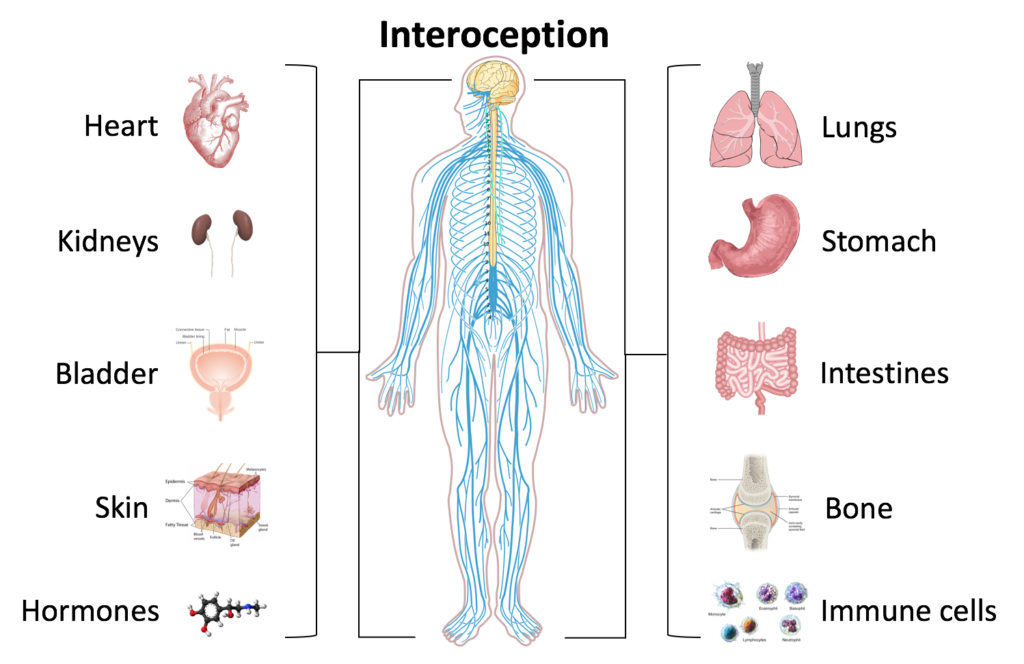
Special sensors in organs, blood vessels, muscles, and skin constantly monitor things like stomach stretch, blood sugar, heart rate, temperature, bladder fullness, and inflammation. These signals travel along nerves (including the vagus nerve and spinal pathways) and via hormones and immune signals to the brain, giving it a live feed of the body’s internal state.[2][3][4]
From signals to feelings
Brain regions such as the brainstem, thalamus, insula, and cingulate cortex integrate these internal signals into a “map” of how the body is doing. When something drifts away from a safe range – like low energy or dehydration – the brain generates conscious feelings such as hunger, thirst, fatigue, discomfort, or pain, which motivate behaviours that restore balance.[5][6][1][2]
Needs as motivating emotions
Many bodily needs appear as what some researchers call homeostatic or “primordial” emotions: hunger, thirst, air hunger, pain, malaise, or well-being. These feelings are not just labels; they come with an urge to act (eat, drink, withdraw, rest, seek comfort), turning internal imbalance into motivated, goal-directed behaviour.[7][8][9][1]
Ongoing loop of regulation
Once action is taken (eating, drinking, changing posture, regulating temperature), interoceptive signals change, and the feelings fade as the body returns toward balance. This creates a continuous loop: body state > internal signals > brain integration > feeling and urge > behaviour > new body state, allowing the organismic flow to be reflected in, and partly guided by, individual awareness.[10][11][12][13]
References and Further Reading