Lesson Twelve

Boundaries

What Is a Boundary?

A boundary is like an invisible line you draw around yourself. It shows what you are okay with and what you are not. Boundaries protect your feelings, body, and mind from getting hurt or overwhelmed. They help you feel safe and respected—by others and by yourself.

How to Spot When You Need a Boundary

You might feel:

  • Tense or uncomfortable when someone asks too much.
  • Angry when people ignore your feelings.
  • Worn out after time with certain people or places.
  • Confused about your own wants because others push theirs on you.

These feelings mean it’s time to set a boundary.

How to Set a Boundary

  • Know your limits: Decide what feels right for you.
  • Speak clearly and kindly: Say what you need. For example, “I need quiet time after lunch” or “I’d rather not talk about that.”
  • Stay firm but nice: If they push back, remind them gently.
  • Protect yourself: If crossed, say calmly, “That’s not okay with me,” and step away if needed.

What Happens When Someone Crosses Your Boundary?

Your body or mind warns you with tension, anxiety, or upset feelings. Notice these signs fast. Remind them of your boundary. Ask for space or get help if it keeps happening.

If they won’t respect it, protect yourself first. Leave the room, end the talk, or breathe deeply to calm down. Your peace matters more than changing them.

Why Act Fast on Small Crossings

Most people wait too long to speak up. Small ignores build into big anger. That “righteous anger” can lead to rants or big moves like quitting a job.

Acting early stops bad habits from forming. They haven’t learned to ignore you yet, so they listen better. You stay calm—no big list of wrongs in your head.

How to Build Courage to Speak Up Early

  • Catch the first bad feeling: Say simply, “That doesn’t work for me—please stop.”
  • Keep it short: Just state your need firmly, like “I need quiet now.”
  • Practice small: Ask a shop worker to repeat something to build your voice.
  • Remind yourself: “Speaking now saves pain later.”

Early action shows strength and keeps your mind clear.

How It Feels to Set Boundaries

At first, it feels odd if you’re used to saying yes to all. But soon it feels:

  • Freeing: you control your well-being.
  • Calming: less stress.
  • Respectful: you value yourself, so others do too.

Examples

  • You want to read after dinner, but family asks for help. Say: “I need 30 minutes alone to read each evening. I’ll help after.”
  • Friend calls late, ruining sleep. Say: “Please call before 9pm so I can rest.”

Clear words keep your peace strong.

Boundaries help you care for yourself and live balanced and happy.

Lesson Affirmation
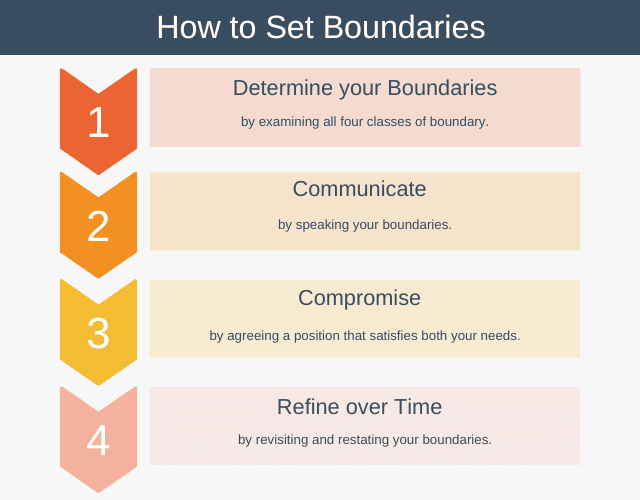
How-to-Set-Boundaries

Set a firm intention to ensure that you begin setting and enforcing boundaries, that you will be firm, but able to compromise and negotiate something that you are able to accept.

Appendix: Notes

What Is a Boundary?

A boundary is like an invisible line you draw around yourself that shows what you are comfortable with and what you are not. It protects your feelings, body, and mind from being hurt or overwhelmed. Boundaries help you feel safe and respected by others and by yourself.

How to Recognise the Need for a Boundary

You may feel:

  • Uncomfortable or tense when someone asks too much of you.
  • Angry or upset when your feelings aren’t taken seriously.
  • Drained or exhausted after spending time with certain people or in certain places.
  • Confused about what you really want or need because others push their choices on you.

These feelings are signs that you need to set a boundary to protect yourself.

How to Set a Boundary

Know what feels right for you: Decide what you are okay with and what you are not.

Speak clearly and kindly: Tell others what you need. For example, say, “I need some quiet time after lunch,” or “I prefer not to talk about that.”

Stay firm but polite: If someone tries to ignore your boundary, remind them gently but firmly.

Take care of yourself if challenged: If a boundary is crossed, calmly say, “That’s not okay with me,” and if needed, remove yourself from the situation.

What Happens If a Boundary Is Infringed?

If someone crosses your boundary, your body or mind may send warning signs like feeling upset, anxious, or tense. It’s important to notice these signs and act to protect yourself by reminding the other person about your boundary, asking for space, or seeking help if needed.

When someone ignores your boundary and refuses to respect it, causing you to feel anxious and upset, the next step is to protect yourself as much as possible. Calmly remind them again of your boundary if you can, and if they still refuse to listen, try to physically or emotionally remove yourself from the situation. This might mean leaving the room, ending the conversation, or taking deep breaths to calm your mind. It is okay to prioritize your own peace and safety above trying to change someone else’s behaviour.

Acting Early on Boundary Infringements

Your tip is spot on: most people wait too long before speaking up about a boundary being crossed, and that delay builds up upset inside them. By letting small infringements slide a few times, their mind fills with a long list of wrongs, turning into big anger that takes over. This “righteous anger” can lead to rants or even big choices like quitting a job, when acting sooner could keep things calm.

Why Early Action Works Best

Raising the issue right away, at the first sign, stops it from becoming a habit for the other person. They haven’t got used to ignoring you yet, so they’re more likely to listen and change. You stay much less upset because there’s no big build-up of grievances in your head. No endless inner talk or boiling frustration – just a quick, clear word keeps your peace intact.

How to Build the Courage to Speak Up Early
  • Notice the first twinge: As soon as you feel even a little off, say something simple like, “That doesn’t work for me – please stop.”
  • Keep it short and calm: No need for a big speech. Just state your boundary firmly, like “I need you to respect my quiet time now.”
  • Practice in small ways: Start with low-stakes moments, like asking a shop worker to repeat something, to build your voice.
  • Remind yourself: “Speaking now saves me pain later.” This gives you the push before anger grows.

Acting early shows strength and self-respect, keeping relationships healthier and your mind clearer from the start.

By taking these steps, you lower the chance of being swept away by strong emotions and stay in control of the situation, protecting your well-being even if others don’t cooperate. This is part of honouring and caring for yourself deeply.

How Does It Feel to Set and Maintain Boundaries?

Setting boundaries can feel:

  • Uncomfortable at first, especially if you’re used to saying “yes” to everyone.
  • Empowering and freeing, because you are taking control of your own well-being.
  • Calming, as you reduce stress and protect your peace.
  • Respecting yourself more, which helps others respect you too.

Examples

Example 1: You love reading after dinner but a family member keeps asking for you to help them. Setting a boundary could be saying, “I need half an hour every evening to myself to read. I’ll help you after that.”

Example 2: A friend often calls late at night, making it hard for you to sleep. You might say, “Please call me before 9pm, so I can rest well.”

Both examples show how knowing your needs and gently but clearly telling others helps keep your peace and health strong.

Boundaries are a key step to caring for yourself and keeping your life balanced and joyful.​


0 Comments

Leave a Reply

Avatar placeholder

Your email address will not be published. Required fields are marked *


Self-Transcendence