Human Thinking
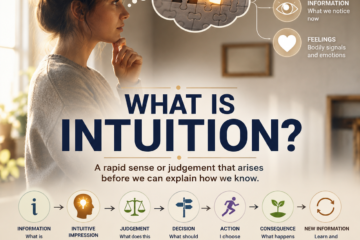
What Is Intuition?
This article introduces the idea of intuition and asks if our intuition can both help and mislead us?
This article introduces the idea of intuition and asks if our intuition can both help and mislead us?
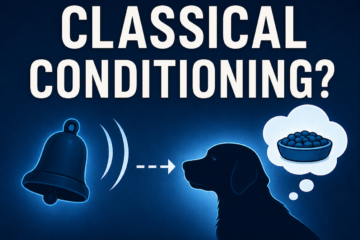
This article explains Pavlov’s Classical Conditioning, and uses his dog-training analogy to introduce the theory, before explaining the differences when applied to people.
This article introduces operant conditioning, a key part of our basic understanding of human behaviour and learning.

This article explores the relationship between anxiety and fear. It explains how those two emotions work together to form part of a threat feedback loop, in order to inform not just about a particular threat, but also, its imminence.

This article introduces defensive responses, focussing on fight, flight and freeze, as well as the underpinning psychological thinking.

In this article I review my article on Jung’s commentary, regarding ghosts as possibly projections from the self. In then view this from a phenomenological and Hillmanian “universal soul” point of view, and in so doing I open an entirely new universe of possibilities.

The first ten entries established the foundations of archetypal psychology. Those concepts describe how psyche presents itself and how psychological attention may respond. Part Two follows the consequences.

This glossary is not arranged alphabetically. It unfolds conceptually. The sequence begins with soul, the perspective from which Hillman believes psychology should proceed. Part I of II

James Hillman’s archetypal psychology presents the psyche as fundamentally plural, or or of multiple minds. Human beings do not possess only one psychological voice, value system or centre of intelligence.

James Hillman’s archetypal psychology and Richard Schwartz’s Internal Family Systems therapy appear, at first sight, to describe remarkably similar psychological worlds.