Contents
The Human Organism
The human organism is a single living being made of body and mind working together as one whole system. It is not just a collection of parts, but a coordinated living process that grows, reacts, thinks, feels, and adapts.
What “organism” means
An organism is any living thing that can carry out the basic activities of life: taking in nutrients, reacting to the environment, growing, repairing itself, and (as a species) reproducing.
A human organism is this idea applied to a person: one living, organised whole made up of many parts that depend on each other.
How the human organism is built
The human organism is structured in layers:
- Cells → tiny living units.
- Tissues → groups of similar cells.
- Organs → body parts like heart, lungs, brain.
- Systems → groups of organs working together (for example, nervous system, circulatory system). All these systems interact continuously, so a change in one (like stress hormones) can affect many others (heart, digestion, sleep, mood).
Body and mind as one organism
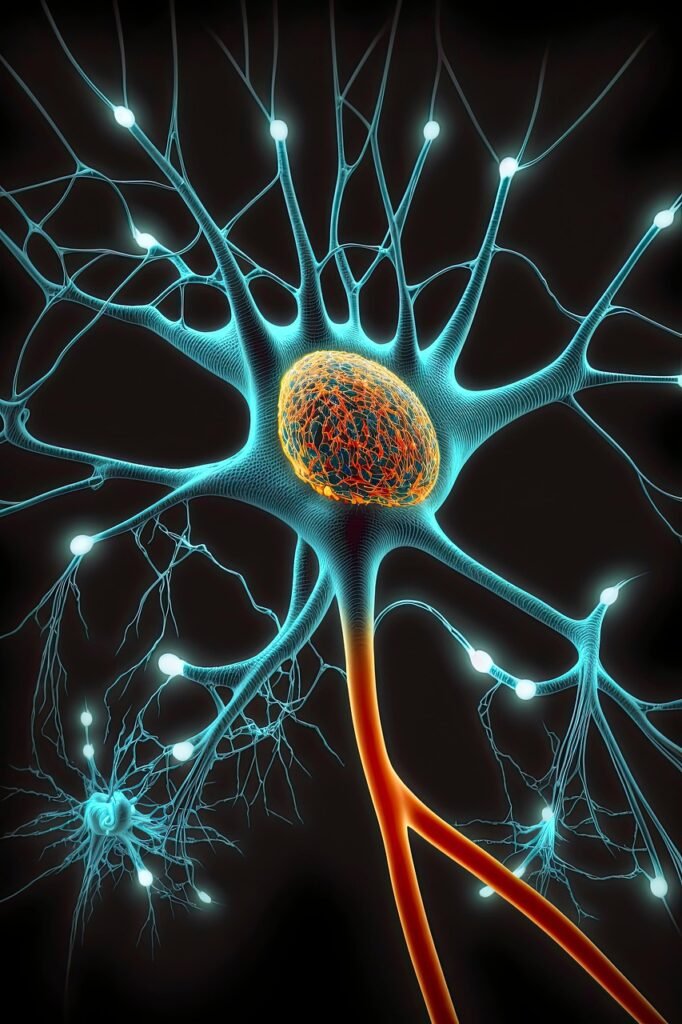
The brain and nervous system are part of the body, and what happens in the body (breathing, heart rate, tension, gut signals) feeds back into thoughts and feelings.
Modern research supports the idea that mind and body are deeply intertwined, not two separate machines: movement, posture, and bodily sensations shape attention, emotion, memory, and decision-making.
Constant balance and adaptation
To stay alive and well, the human organism constantly keeps balance (homeostasis): controlling temperature, blood sugar, fluid levels, and many other variables. At the same time, it is always adapting by learning from experience, healing from injury, adjusting to stress, and changing behaviour to fit the environment.
The human organism is “you as a whole”: a living, sensing, thinking body-mind system, made of many parts but functioning as one continuously changing, self-regulating life process.
Further Reading
https://www.britannica.com/science/human-body
https://www.merriam-webster.com/dictionary/organism
https://www.biologyonline.com/dictionary/organism
https://study.com/academy/lesson/organism-definition-lesson-quiz.html
https://fiveable.me/key-terms/anatomy-physiology/organism
https://www.biologyonline.com/dictionary/human
https://joannamoncrieff.com/philosophy-part-4-dualism-and-the-mind-body-problem/
https://medicine.washu.edu/news/mind-body-connection-is-built-into-brain-study-suggests/
https://www.simplypsychology.org/mindbodydebate.html
https://pmc.ncbi.nlm.nih.gov/articles/PMC3115289/
https://pmc.ncbi.nlm.nih.gov/articles/PMC8376694/
https://www.mindandlife.org/insight/embodiment/
https://askthescientists.com/human-organism/
https://doi.wiley.com/10.1002/2059-7932.12011
https://link.springer.com/10.1007/s11356-016-6388-8
https://journals.sagepub.com/doi/10.1111/2059-7932.12011
https://journals.sagepub.com/doi/10.1177/155005949903000408
https://royalsocietypublishing.org/doi/10.1098/rsos.201886
https://www.journals.uchicago.edu/doi/10.1086/716097
https://academic.oup.com/jcem/article-lookup/doi/10.1210/jcem.86.2.7228
https://www.semanticscholar.org/paper/a756747ddb64634c6fc89a073e69a18d91c1b764
https://link.springer.com/10.1007/978-1-4471-0487-2_3
https://onlinelibrary.wiley.com/doi/10.1111/j.1467-8519.1990.tb00084.x
https://pmc.ncbi.nlm.nih.gov/articles/PMC3602252/
https://arxiv.org/pdf/1612.00036.pdf
https://pmc.ncbi.nlm.nih.gov/articles/PMC7241894/
https://madridge.org/journals-admin/uploads/pdf/MJIEM/mjiem-1000101.pdf
https://ecoevorxiv.org/tsdek/download
https://downloads.hindawi.com/journals/ipid/2008/613979.pdf
https://pmc.ncbi.nlm.nih.gov/articles/PMC2648621/
https://en.wikipedia.org/wiki/Organism
https://en.wikipedia.org/wiki/Mind%E2%80%93body_dualism
https://en.wikipedia.org/wiki/Mind%E2%80%93body_problem
https://en.wikipedia.org/wiki/Human
https://www.britannica.com/topic/mind-body-dualism
https://iep.utm.edu/dualism-and-mind/


0 Comments