Contents
Human Senses
Humans gather information about the world through multiple sensory systems. While most people learn about five main senses, scientists now recognise at least eight or more distinct ways the body detects and interprets stimuli from both the external environment and within the body itself.
The Classic Five Senses
These are the senses most people are familiar with:
- Sight (Vision) – The eyes detect light and send signals to the visual cortex in the brain. This allows us to perceive colour, judge depth, and recognise faces and objects.
- Hearing (Auditory) – The ears pick up vibrations in the air, which the brain interprets as sounds. This sense also helps regulate balance and sinus pressure.
- Smell (Olfactory) – The nose detects particles floating in the air and sends that information to the brain. Smell has the strongest connection to memory among all senses.
- Taste (Gustatory) – The tongue uses taste buds to detect flavours like sweet, salty, sour, and bitter. This helps distinguish safe foods from harmful ones.
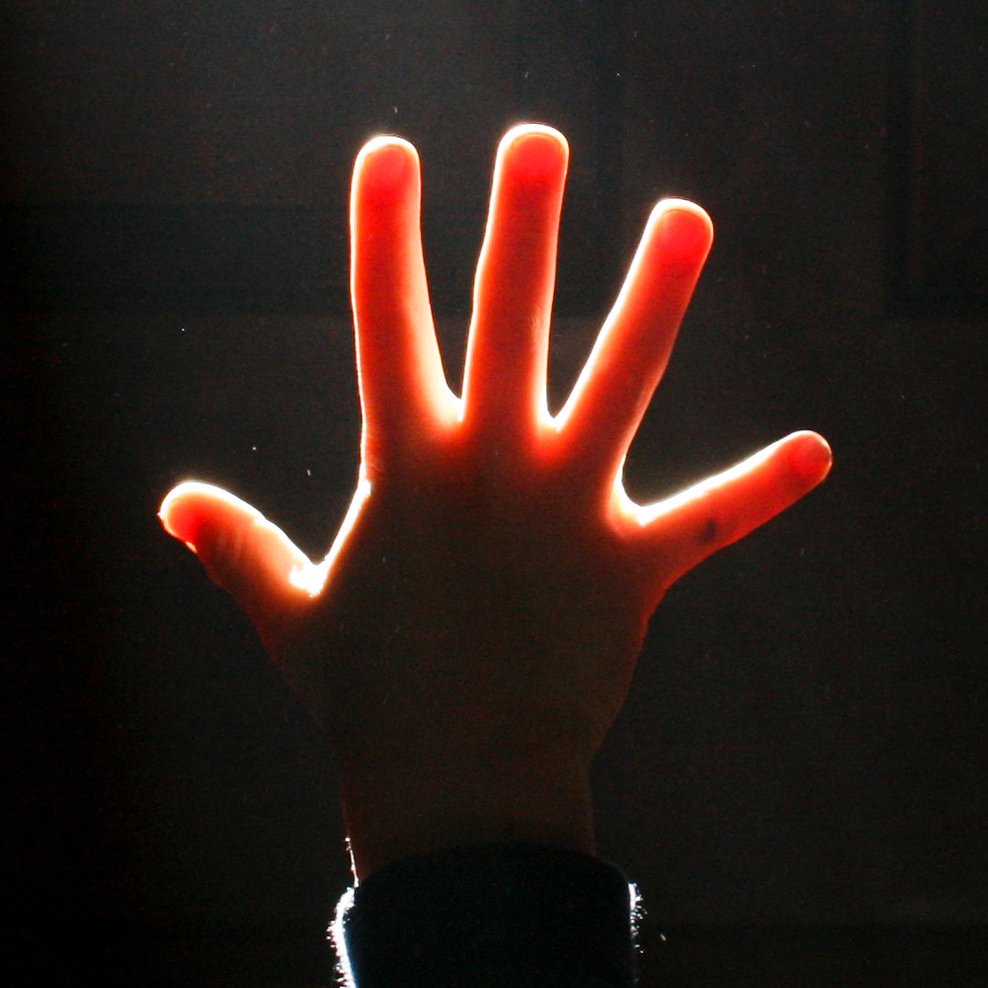
- Touch (Somatosensory) – The skin senses pressure, texture, temperature, and pain. It lets us explore our surroundings and protects us from danger.
The “Hidden” Senses
Beyond the classic five, the body has additional sensory systems that work largely without conscious awareness:
- Balance (Vestibular Sense) – Located in the inner ear, this system provides spatial orientation and helps keep the body balanced.
- Body Position (Proprioception) – This sense tells you where your limbs are in space without needing to look at them, enabling coordinated movement.
- Internal Signals (Interoception) – This system detects sensations from inside the body, including hunger, thirst, heart rate, breathing, and the need to use the bathroom. It plays a key role in emotional awareness and self-regulation.
How the Senses Work Together
Each sense captures a different aspect of reality and sends information to specific areas of the brain for processing. The brain then combines these inputs to create a unified picture of what is happening around and within you. For most people, vision dominates, as a large portion of the brain is dedicated to visual processing. However, all senses contribute unique and essential information for navigating daily life.
Further Reading
https://www.bbc.co.uk/bitesize/articles/zsbntrd
https://en.wikipedia.org/wiki/Sense
https://sensoryhealth.org/basic/your-8-senses
https://www.sensorytrust.org.uk/blog/how-many-senses-do-we-have
https://papromiseforchildren.com/the-5-basic-human-senses/
https://study.com/academy/lesson/the-five-senses-their-functions.html
https://www.bioedonline.org/BioEd/cache/file/F07A793B-B9A1-DECC-7F1B6E5E901167CE.pdf
https://www.youtube.com/watch?v=rIEgbqWAuAo
https://neurologyoffice.com/the-5-senses-in-neurology-a-patient-guide-to-sensory-loss/
https://www.floridamuseum.ufl.edu/wp-content/uploads/sites/16/2017/03/MESS-Body-Senses-Guide.pdf
https://kidshealth.org/classroom/prekto2/body/functions/senses.pdf
https://www.metisjournal.it/index.php/metis/article/view/451
https://linkinghub.elsevier.com/retrieve/pii/S0950061809003389
https://www.semanticscholar.org/paper/c9a5cf3de5129abba075b9051fe641514277bc39
https://f1000research.com/articles/13-817/v1
https://www.semanticscholar.org/paper/b40dfd538f7e8e84bed05e885c4106c063cc3d08
https://ieeexplore.ieee.org/document/10104794/
https://www.scielo.br/scielo.php?script=sci_arttext&pid=S1413-85572023000100313&tlng=en
https://pubs.aip.org/apl/article/110/14/143902/594274/Scavenging-energy-from-human-walking-through-a
https://www.emerald.com/sl/article/39/4/35-40/343083
https://www.semanticscholar.org/paper/ef98fbb3f63c4bdcfec80a7af31c4dcee9094aa7
https://madridge.org/journal-of-internal-and-emergency-medicine/mjiem-1000109.pdf
https://pmc.ncbi.nlm.nih.gov/articles/PMC8730653/
https://www.frontiersin.org/articles/10.3389/frym.2021.548120/pdf
https://pmc.ncbi.nlm.nih.gov/articles/PMC10184562/
https://pmc.ncbi.nlm.nih.gov/articles/PMC9452305/
https://pmc.ncbi.nlm.nih.gov/articles/PMC6439788/
https://downloads.spj.sciencemag.org/cbsystems/2021/9843259.pdf
https://pmc.ncbi.nlm.nih.gov/articles/PMC11252028/