Contents
Self-talk
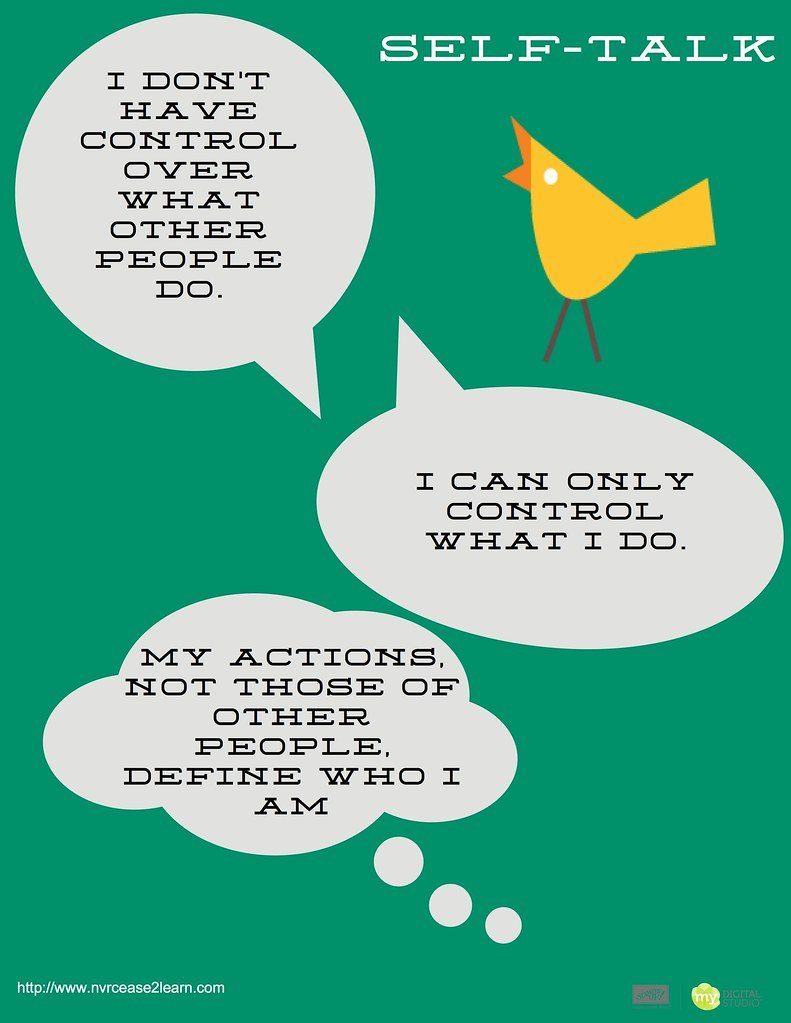
Self-talk is the running conversation you have with yourself in your own mind. It is the voice that comments on what you do, feel, and think. It can be kind and supportive, or harsh and cruel. Over time, your self-talk shapes how you see yourself and how you act.
What self-talk is
Self-talk is:
- The words you say to yourself in your head (and sometimes out loud).
- The stories you tell yourself about who you are and what things mean.
- The tone you use with yourself: gentle, fair, or critical and punishing.
Examples:
- “I always mess things up.”
- “That was hard, but I did my best.”
- “They probably hate me now.”
- “I’m learning; it’s okay not to be perfect.”
Even when you don’t notice it, self-talk is happening in the background almost all the time.
Why self-talk matters
Your self-talk affects:
- How you feel: Harsh thoughts can create shame, anxiety, and low mood; kind thoughts can bring calm and confidence.
- What you do: If you think “I can’t,” you’re less likely to try; if you think “I’ll give it a go,” you’re more likely to act.
- Your self-worth: Repeating “I’m useless” or “I’m too much” wears down your sense of value.
- Your relationships: If you constantly attack yourself, you may accept others attacking you too, or you push people away because you feel unlovable.
In simple terms: how you talk to yourself becomes how you live with yourself.
Types of self-talk
Negative self-talk
This is the critical, unkind voice:
- “I’m stupid.”
- “No one really likes me.”
- “I always fail.”
- “I shouldn’t feel this way.”
It often comes from past experiences, from caregivers, teachers, bullies, or shame moments; those had the impact of teaching you that you’re “not good enough.” This voice thinks it’s protecting you from future pain, but it usually just keeps you stuck.
Neutral or factual self-talk
This is realistic and calm:
- “I made a mistake in that email.”
- “I’m nervous about this meeting.”
- “Today was harder than I expected.”
It doesn’t attack you as a person; it just describes what happened.
Supportive self-talk
This is kind, encouraging, and honest:
- “That was difficult, but I tried.”
- “I’m allowed to rest when I’m tired.”
- “I can learn from this and do better next time.”
It sounds like a good, patient friend—firm when needed, but never cruel.
How to notice your self-talk
Pause and listen: When you feel a strong emotion (shame, fear, anger), stop for a moment and ask: “What am I saying to myself right now?”
Write it down: For a few days, jot down key phrases you catch in your head. Patterns will show: maybe a lot of “I always…” or “I never…”
Ask: “Whose voice is this?”: Sometimes your self-talk sounds like a parent, teacher, or bully from the past. That helps you see it is learned, and not a simple truth about you.
How to gently change self-talk
You don’t have to go from “I hate myself” to “I love myself” overnight. Aim for “less cruel, more fair.”
Step 1: Catch the harsh thought
For example: “I’m useless; I ruined everything.”
Step 2: Question it
Ask:
- “Is this 100% true?”
- “Would I say this to someone I care about in this situation?”
Usually the answer is no.
Step 3: Replace it with something more fair
Not fake-positive, just kinder and more accurate:
- “I made a mistake, but that doesn’t make me useless.”
- “This went badly, and I can learn from it.”
- “I’m upset, and that’s understandable.”
Repeat the new line a few times. At first it will feel strange; that’s okay. You’re teaching your mind a new habit.
Examples of healthier self-talk swaps
- From: “I always mess up.”
To: “Sometimes I mess up, like everyone. I can fix this or try again.” - From: “I’m so stupid.”
To: “I didn’t know what to do there. I can learn.” - From: “No one cares about me.”
To: “I feel lonely right now. There are people who care, and I can reach out.” - From: “I shouldn’t feel like this.”
To: “This feeling is uncomfortable, but it makes sense. I’m allowed to feel it.”
Self-talk as a form of self-care and self-respect
Changing how you talk to yourself is a powerful way to:
- Build self-respect (“I won’t abuse myself in my own head”).
- Support authenticity (“I can be honest about my feelings without attacking myself”).
- Reduce the need for heavy masking and showing off, because you’re not constantly telling yourself you’re not enough.
Think of it this way: If a child spoke to you the way you speak to yourself, would you comfort them or join in the attack? Your self-talk can either be an inner bully or an inner ally.
Simple daily practices
Morning check-in: “What kind of voice do I want in my head today, a harsh judge or kind guide?”
One kind sentence a day: Say to yourself: “I’m trying, and that matters,” or “I’m allowed to be human today.”
End-of-day reflection: Ask, “What did I say to myself today that hurt?” and “What could I have said instead?”
In plain terms: self-talk is the way you speak to yourself when no one else is listening. You may not control every thought that appears, but you can choose which ones you feed and which ones you gently replace. Over time, changing your self-talk is like changing the climate inside your own mind, from hostile and cold to safer, warmer, and more liveable.