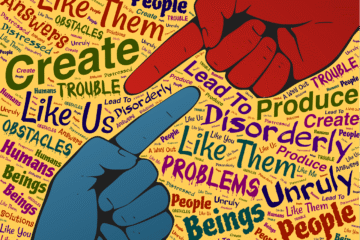
Social Control: Scapegoating
Scapegoating is a troubling concept that plays a significant role in social dynamics and psychology. Scapegoating is the practice of singling out a person or group for unmerited blame and negative treatment.

There is a societal version of the “broken record” phenomenon, where a false narrative is repeated so often that it becomes ingrained, leading to internalized blame and self-doubt.
The Strange Situation experiment, developed by Mary Ainsworth in the late 1960s, revolutionized the study of attachment and laid the foundation for a systematic, observational method to assess the quality of infant-caregiver attachment
This article looks into the basic family relationship, as driven by our genetic need for connection, support, nurturing and protection. We then propose a typical dysfunctional scenario, based on parents that are avoidant of that connection. It proposes that this scenario will result in children that will include a scapegoat, who may well develop C-PTSD based Stockholm Syndrome, before they are old enough to verbalise their long-term abuse. It also introduces a new term – Puppy-dog Syndrome, to describe one of the observable behaviours of children that have had this childhood.
Pattern recognition is not just a cognitive process; it is the brain’s way of saying, “Hey, I’ve seen this before – probably!”. At its core, every pattern is symbolic, and every symbol is a pattern, whether it’s a face in a crowd, a melody from a few notes, or the uncanny resemblance between your boss and a grumpy badger.
The “Blame Game” is a pattern of behaviour where people avoid taking responsibility for problems, mistakes, or bad feelings by finding someone else to blame. This often happens when something goes wrong and, instead of working together to solve the issue or learn, people start pointing fingers; sometimes to escape punishment, sometimes to protect their ego, or just because that’s the pattern they learned from others.
Behaviourism can help deepen our understanding of how societal systems of reward and punishment condition individuals, shape ego processes, and ultimately entrench a culture of blame.
There are intrusive actions, intrusive feelings, intrusive emotions and intrusive thoughts. They are all intrusive, as they are not wanted, but there is no indication of them being from someone else, or an external influence.
The development of game theory in the 1940s and 1950s marked a significant advancement in understanding strategic interactions among rational agents.
The Theory of Rationality, often associated with Rational Choice Theory, is a framework used to understand decision-making processes.