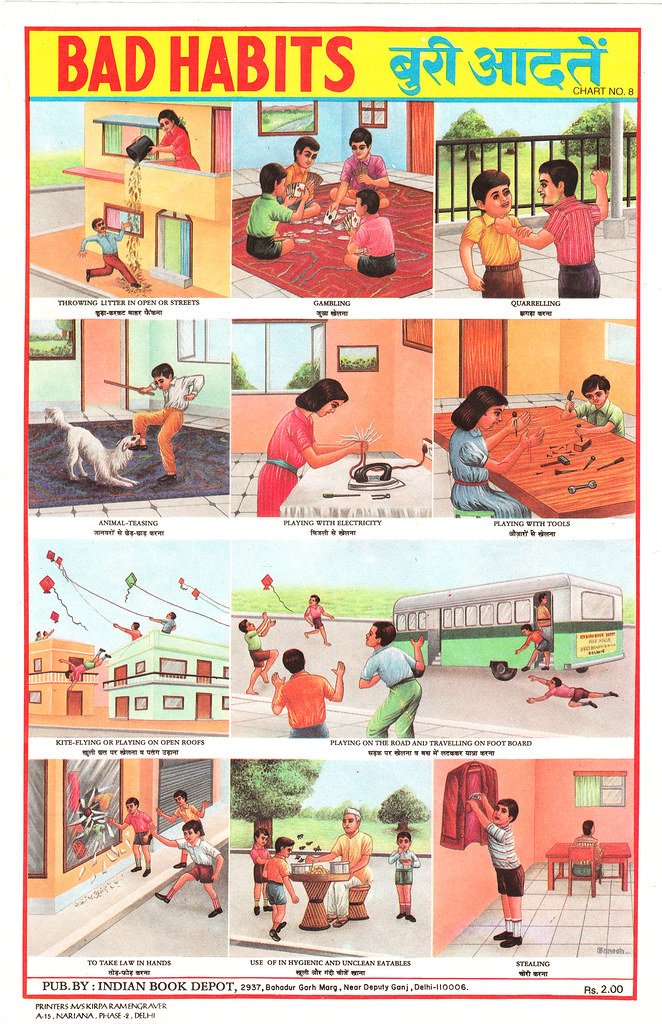
“Bad Habits” by counterclockwise is licensed under CC BY-NC-SA 2.0
Contents
Training the Ego
Lesson Four
Before we start this lesson, let’s take a moment to watch this video, and settle our mind.
[dsgvo-youtube url=”https://youtu.be/z-3n5iBi4u0″ images=”https://self-transcendence.org/wp-content/uploads/2025/12/30-seconds-of-breathing-1024×546.png” alt=”30 seconds of breathing”][/dsgvo-youtube]
Setting Good Habits
You start your new way. You write or draw each day. But how do you stick with it? Good news waits for you. Most habits form fast.
Repeating something just three times in a row can plant the seed that can grow into a healthy habit.
Pick one spot and time. Say, right after your tea. Do your task there each day. Keep it small and same. Feel the pull of repetition grow into a strong feeling of achievement.
By day three, check your heart. Does it feel more like you? If yes, then that habit will take root.
What if it this new habit does not stick? That is fine. Do not fight it too hard.
This miss shows you a truth. Maybe this time it feels wrong for you? Or maybe you just need more time? Come back to it another time. Maybe you are seeing it as a chore?
Move to a different habit to try to build. You might learn something about yourself, and come back to that original plan with more determination. This is how you grow wise.
Breaking Bad Habits
Bad habits can hold on tight. Often, you want to break free from them, but it can be heard.
You can break them, you can win.
But, it is important to know that some bad habits can keep you safe.
The first thing to know, is to know your triggers. Triggers are events or feelings that starts your habit? Is it stress? Being in a certain place?
You will need to find that cue, but it may take time. You may need to keep the habit a bit longer, while you get to know exactly how, and why, it happens.
Watching for habits can be a bit of a pain.
Sometimes, every time we undo them,
They come back, all over again.
That is really ok, to be this way,
Think of that knowledge you have gained.
About yourself, in this world,
And how you feel, think and work.
And how you can change you habitual thirst,
Simply by putting yourself first.
Once you understand your habit, and feel confident to try and change it.
What can to do to stop being triggered? If you force yourself to change, then you might find a new habit comes along to replace it.
Sometimes, that is exactly what is needed – find something new that is healthy, and you enjoy, and do that instead!
Perhaps you might make a habit of reading one of our Simple Guides every day?
If you want to eat less sugar, try fruit instead. If you stress-eat, try our calm-breathing.
Remember, it’s okay to slip. Don’t quit, though, keep trying. Each try teaches you more about yourself. Sometimes other things, hidden away by ego, need that habit to be maintained.
Use your mind to see success; Imagine the new you – paint a picture, or write a story, of that new you.
Be patient. Bad habits fade with slow and steady change. You have the power to choose your own path, this includes when and how to drop those not so bad, sometimes helpful habits.
Lesson Affirmation

Habits – Getty Images
Set yourself the intention to look at your habits, and see if they are still right for you.
Lesson Video
[dsgvo-youtube url=”https://youtu.be/27qUZLk3iEw” images=”https://self-transcendence.org/wp-content/uploads/2025/12/15-morning-habits.png” alt=”15 habits for a good morning”][/dsgvo-youtube]
Optional Further Reading



0 Comments