Human Thinking
What is Operant Conditioning?
This article introduces operant conditioning, a key part of our basic understanding of human behaviour and learning.
This article introduces operant conditioning, a key part of our basic understanding of human behaviour and learning.
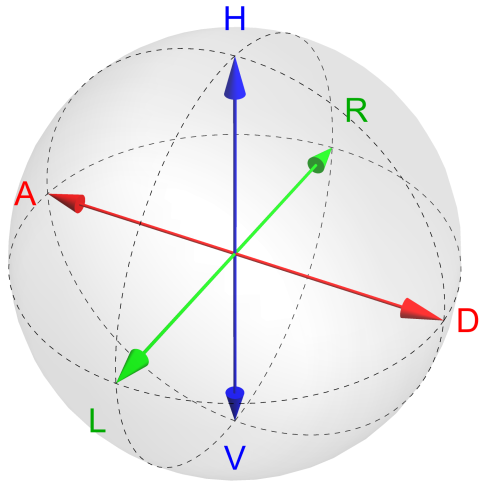
The Bloch sphere emerged from quantum mechanics of spin-1/2 particles (two-level systems like qubits or nuclear spins) in magnetic fields, generalizing classical spin precession to quantum superpositions.

Authenticity, I suggest, is a continuum, a spectrum of stages, that may never end, since the self is a largely unknown thing, and that exploration of self, if done with regular determination, is always going to be revealing “new stuff”.

Snygg and Combs’ phenomenal field theory, outlined in Individual Behaviour: A New Frame of Reference for Psychology (1949), posits that all behaviour is completely determined by the individual’s phenomenal field, which they described as the individuals total subjective awareness of reality, including perceptions, feelings, thoughts, and values.

The interplay between behaviourism and the psychological mechanisms of avoiding personal truths and projecting blame as part of the phenomena we know as scapegoating, is multidimensional, changing from target to target, based on specific triggers and biases, originating from differing attachment needs.

Scapegoating is a troubling concept that plays a significant role in social dynamics and psychology. Scapegoating is the practice of singling out a person or group for unmerited blame and negative treatment.

There is a societal version of the “broken record” phenomenon, where a false narrative is repeated so often that it becomes ingrained, leading to internalized blame and self-doubt.

This article looks into the basic family relationship, as driven by our genetic need for connection, support, nurturing and protection. We then propose a typical dysfunctional scenario, based on parents that are avoidant of that connection. It proposes that this scenario will result in children that will include a scapegoat, who may well develop C-PTSD based Stockholm Syndrome, before they are old enough to verbalise their long-term abuse. It also introduces a new term – Puppy-dog Syndrome, to describe one of the observable behaviours of children that have had this childhood.

Pattern recognition is not just a cognitive process; it is the brain’s way of saying, “Hey, I’ve seen this before – probably!”. At its core, every pattern is symbolic, and every symbol is a pattern, whether it’s a face in a crowd, a melody from a few notes, or the uncanny resemblance between your boss and a grumpy badger.
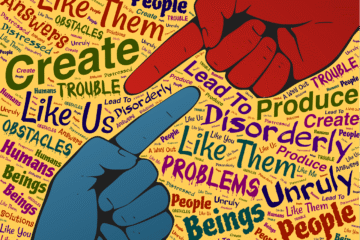
The “Blame Game” is a pattern of behaviour where people avoid taking responsibility for problems, mistakes, or bad feelings by finding someone else to blame. This often happens when something goes wrong and, instead of working together to solve the issue or learn, people start pointing fingers; sometimes to escape punishment, sometimes to protect their ego, or just because that’s the pattern they learned from others.