
Art
Glossary of Hillmanian Thought: The First Ten Principles
This glossary is not arranged alphabetically. It unfolds conceptually. The sequence begins with soul, the perspective from which Hillman believes psychology should proceed. Part I of II
This glossary is not arranged alphabetically. It unfolds conceptually. The sequence begins with soul, the perspective from which Hillman believes psychology should proceed. Part I of II

James Hillman’s archetypal psychology presents the psyche as fundamentally plural, or or of multiple minds. Human beings do not possess only one psychological voice, value system or centre of intelligence.

James Hillman’s archetypal psychology arose from Carl Gustav Jung’s analytical psychology, but it should not be understood merely as a later version of Jungian theory. Hillman retained some of Jung’s most radical propositions while questioning the conceptual structure Jung had built around them.
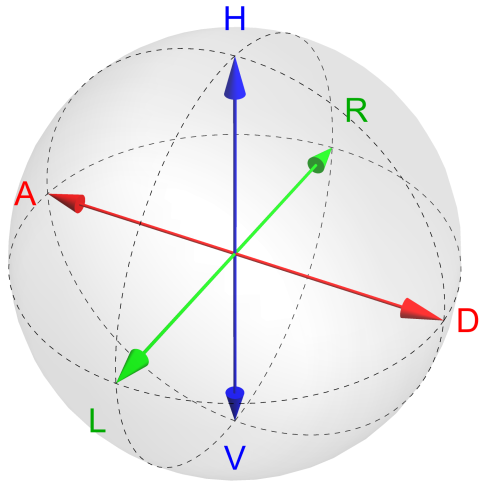
The Bloch sphere emerged from quantum mechanics of spin-1/2 particles (two-level systems like qubits or nuclear spins) in magnetic fields, generalizing classical spin precession to quantum superpositions.

Jung’s use of the terms “unconscious projections” and “exteriorisations” aligned with his developing theory of autonomous complexes, he said that these were psychological contents that can manifest with apparent independence from conscious control.

Jung developed his theory of autonomous complexes in 1908, through word association experiments at the Burghölzli psychiatric clinic in Zurich. By measuring subjects’ reaction times to stimulus words and noting hesitations, slips, and emotional reactions, Jung discovered patterns suggesting emotionally-charged “hot spots” in the unconscious.