Contents
Belonging
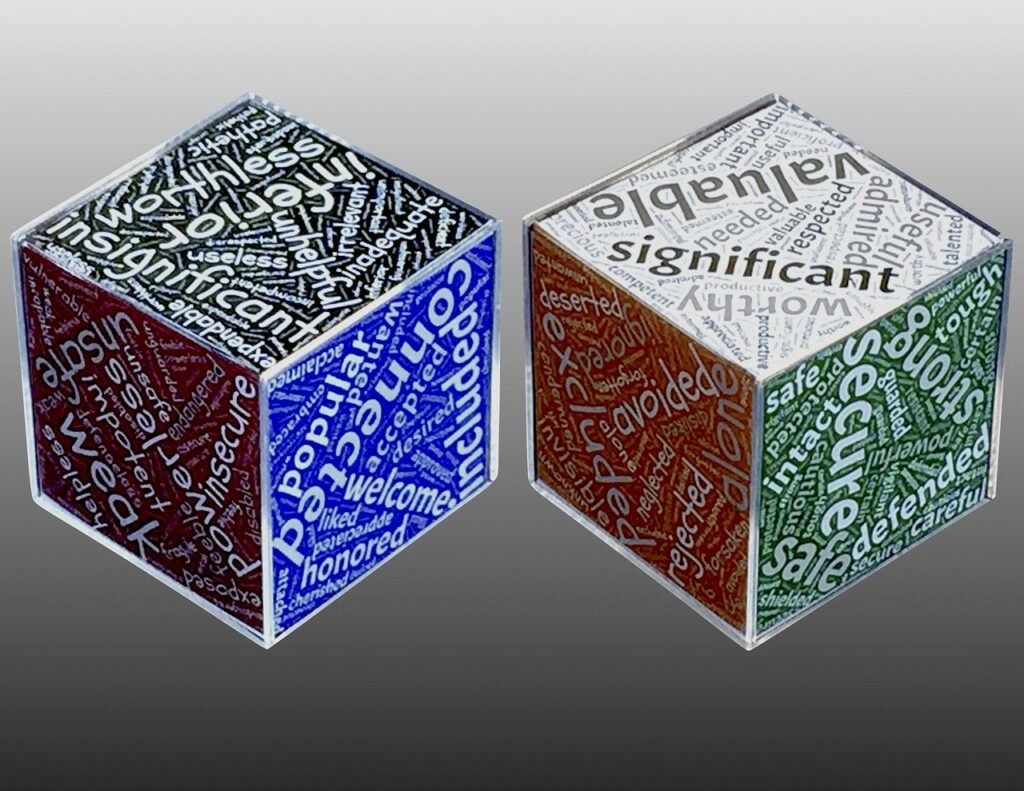
Belonging is the feeling of “I fit here and I matter here” with other people or in a place. It is the sense of being accepted, included, and valued, rather than feeling like an outsider.
What is belonging?
Belonging is a warm, settled feeling that you are part of a group – a family, friendship circle, team, school, workplace, community, culture, or even an online space. It is less about how many people are around and more about the quality of the connection: “these people see me and want me here.”
Psychologists describe belonging as a basic human need, not a luxury; humans are wired to seek and maintain close, positive relationships and to feel like an integral part of their surroundings.
How belonging feels
When people feel they belong, they usually:
- Feel safer, calmer, and more comfortable being themselves, without constant pretending.
- Feel that their presence and contributions are noticed and appreciated.
- Have a sense of “we” instead of only “me versus them,” which supports confidence and resilience.
When belonging is weak, people can feel lonely, invisible, or “on the edge,” which often increases anxiety, sadness, and self-doubt.
Where belonging can come from
Belonging can be felt in many places, for example:
- Close relationships (friends, partners, family, chosen family).
- Groups and communities (clubs, faith groups, sports teams, workplaces, neighbourhoods).
- Places that feel like “mine” or “ours” (a favourite café, school, city, or online community).
It is also possible to feel belonging to identities and cultures (for example, language, heritage, shared experiences), even when people are physically apart.
Simple ways to nurture belonging
Invest in a few real connections: Time, listening, and shared experiences with a small number of people often matter more than having many loose contacts.
Join or build communities around shared interests or values: Hobbies, volunteering, support groups, and learning spaces can create natural “we’re in this together” feelings.
Offer belonging to others: Being welcoming, remembering names, inviting people in, and showing appreciation not only helps them feel they belong, it often deepens your own sense of belonging too.
Give Gratitude and Honour: Celebrate your sense of togetherness. Have a party! But, remember those boundaries, when letting your hair down!
Belonging is the deep-down sense that you are not alone in the world: you have people and places where you fit, are accepted as you are, and would be missed if you were gone.
Further Reading
https://www.ebsco.com/research-starters/social-sciences-and-humanities/belongingness-sense-belonging
https://pmc.ncbi.nlm.nih.gov/articles/PMC8095671/
https://en.wikipedia.org/wiki/Belongingness
https://psychology.org.au/for-members/publications/inpsych/2019/june/making-sense-of-belonging
https://www.inclusivv.co/blog/belonging-what-it-is-why-it-matters-and-how-to-nurture-it
https://pmc.ncbi.nlm.nih.gov/articles/PMC9955914/
https://diversity.cornell.edu/belonging/belonging-metrics/sense-belonging
https://ed.stanford.edu/news/psychology-belonging-0
https://public.scnchub.com/palr/index.php/palr/article/view/180/164
https://www.tandfonline.com/doi/full/10.1080/15290824.2023.2196505
https://www.semanticscholar.org/paper/c7717cf8fa565dec4a5d84ff208d8c6215fd3c1d
https://psychkont.osu.cz/fulltext/2022/PAJK_22-2_Paulik.pdf
https://journals.sagepub.com/doi/10.1177/0146167291175001
https://journals.uran.ua/index.php/2227-6246/article/view/345782
https://www.imrpress.com/journal/AP/21/3/10.5455/apd.63211
https://journals.sagepub.com/doi/10.1207/s15328023top2502_15
https://pmc.ncbi.nlm.nih.gov/articles/PMC8405711/
https://pmc.ncbi.nlm.nih.gov/articles/PMC8439251/
https://pmc.ncbi.nlm.nih.gov/articles/PMC8008535/
https://www.mdpi.com/2254-9625/13/2/25/pdf?version=1675241516
https://www.frontiersin.org/articles/10.3389/frym.2020.00099/pdf
https://juniperpublishers.com/pbsij/PBSIJ.MS.ID.555747.php