
Art
Glossary of Hillmanian Thought: The First Ten Principles
This glossary is not arranged alphabetically. It unfolds conceptually. The sequence begins with soul, the perspective from which Hillman believes psychology should proceed. Part I of II
This glossary is not arranged alphabetically. It unfolds conceptually. The sequence begins with soul, the perspective from which Hillman believes psychology should proceed. Part I of II
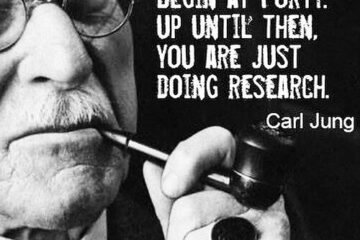
James Hillman’s archetypal psychology arose from Carl Gustav Jung’s analytical psychology, but it should not be understood merely as a later version of Jungian theory. Hillman retained some of Jung’s most radical propositions while questioning the conceptual structure Jung had built around them.
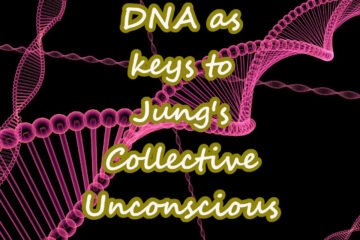
Could we use our intuition in order to embody ancestral archetypes, using keys hidden in our DNA?
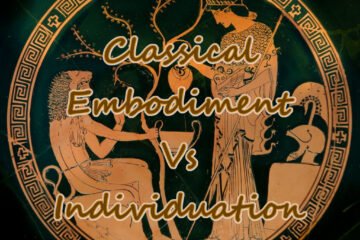
In Jungian terms, a deep, embodied relationship with a deity‑image could be seen as conscious ego and archetype entering into dialogue
Rogers’ phenomenological theory complements DNA-Self Theory by providing a relational framework for reclaiming pruned natural DNA-Originated potentials, but assumes greater accessibility to innate growth drivers than childhood chronic trauma may allow ,ost people to access.

Jung developed his theory of autonomous complexes in 1908, through word association experiments at the Burghölzli psychiatric clinic in Zurich. By measuring subjects’ reaction times to stimulus words and noting hesitations, slips, and emotional reactions, Jung discovered patterns suggesting emotionally-charged “hot spots” in the unconscious.

Almost all children suffer a sustained and often targeted string of traumatic micro, and macro-aggressions, from the moment they are born.

It could be suggested, that in some way, our “cells” are connected via quantum entanglement, and this unseen and highly symbolic communication, is the source of Jung’s collective unconscious, which is also quietly, updating our codes?

Functional Neurological Disorder (FND) is a complex condition that affects how the brain and body communicate.