What are Coping Responses?
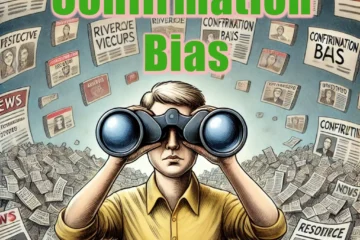
Confirmation Bias
Confirmation bias is a psychological phenomenon where individuals tend to favour information that confirms their pre-existing beliefs.
Confirmation bias is a psychological phenomenon where individuals tend to favour information that confirms their pre-existing beliefs.

This article covers the science behind the practice of self-reflection. Each theoretical model that supports the practice is teased out.

Jung developed his theory of autonomous complexes in 1908, through word association experiments at the Burghölzli psychiatric clinic in Zurich. By measuring subjects’ reaction times to stimulus words and noting hesitations, slips, and emotional reactions, Jung discovered patterns suggesting emotionally-charged “hot spots” in the unconscious.

The dual-mask system, part of the Theory of the DNA-Self could also explain the concept of life positions, as described in transactional analysis.

Almost all children suffer a sustained and often targeted string of traumatic micro, and macro-aggressions, from the moment they are born.

Most psychotherapies begin with the assumption that you have a stable “self” that has developed maladaptive patterns. Integrative Genomic Schema Therapy (IGST) starts from a different premise: what you call “your personality” may be a survival scaffold built over a pruned authentic self.

Functional Neurological Disorder (FND) is a complex condition that affects how the brain and body communicate.

Neuro-Linguistic Programming (NLP) is a fascinating field that combines elements of psychology, communication, and personal development.

Perfectionism is often seen as a trait that leads people to success. It’s frequently associated with a high standard of performance and an intense work ethic. However, it also comes with its set of challenges that can impede an individual’s well-being and growth.

Imposter syndrome is a psychological phenomenon where individuals doubt their accomplishments and have an internalized fear of being exposed as a “fraud.”