Photo by Clker-Free-Vector-Images on Pixabay
Contents
The Human Stomach
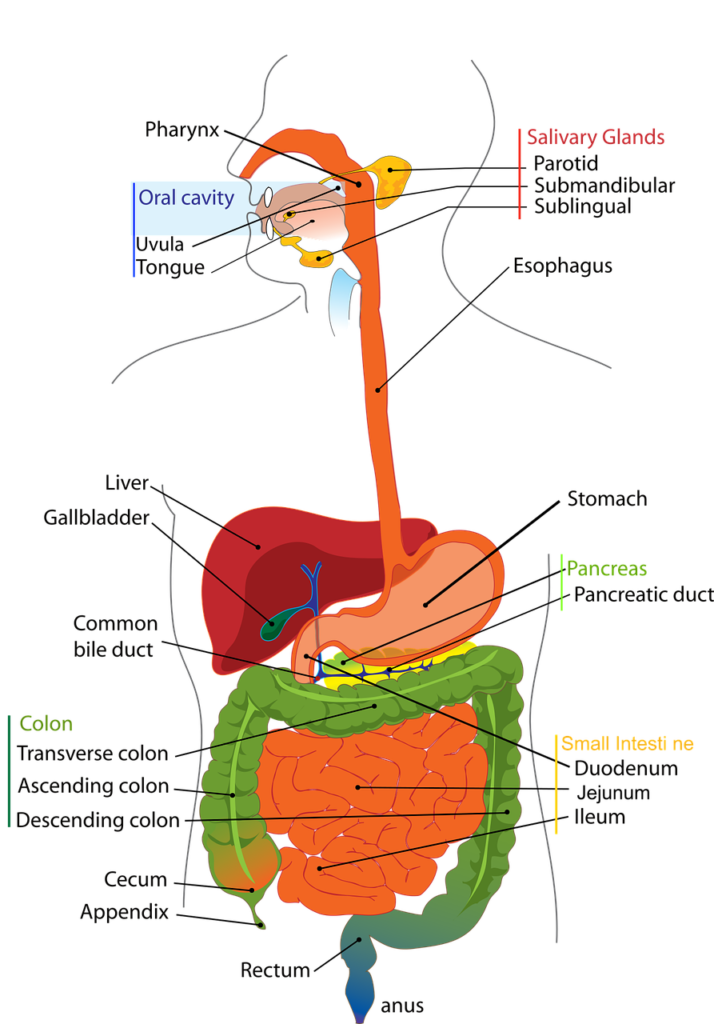
The stomach is a stretchy, muscular bag in the upper part of your belly that acts as a mixing and holding tank for food. It sits between the food pipe (oesophagus) and the small intestine and is part of the digestive system.
What the stomach does
When you eat, food travels down the food pipe and drops into the stomach, where it is stored for a short time instead of rushing straight into the intestines. The stomach’s strong muscles squeeze and churn the food, breaking it into smaller pieces and stirring it with digestive juices.
Stomach acid and juices
The lining of the stomach makes acid and special chemicals called enzymes that start breaking down mainly proteins in your food. The acid also helps kill many germs that come in with food, acting as a kind of safety filter.
From food to “soup”
After about a few hours, the food in the stomach has been turned into a thick, soupy liquid. A small valve at the bottom of the stomach opens a little at a time to let this liquid move into the small intestine, where most nutrient absorption happens. This slow release stops the intestines from being overwhelmed by too much food at once.
Other roles
The stomach lining also makes mucus to protect itself from its own acid, and it produces some hormones that help control hunger, fullness, and digestion. When everything is working well, you hardly notice your stomach; you mainly notice it when it is empty (hunger pangs) or upset (like heartburn or nausea).
References and Further Reading





0 Comments