
Growth Mindset
Self-worth theory
In this article, we will explore the origins and development of self-worth theory, its main concepts and assumptions, and its implications for education, work, and mental health.
In this article, we will explore the origins and development of self-worth theory, its main concepts and assumptions, and its implications for education, work, and mental health.

Gratitude is the simple practice of noticing what’s good and letting yourself feel glad about it. Regular gratitude makes people feel happier, less stressed,
The Philosophy of the Peak-Growth Mindset Socratic logic, solipsism, and skepticism naturally generate different “angles” on any situation, and together they make rainbow thinking both possible and safe. Socratic logic: the interrogating lens Socratic questioning is a disciplined way of…

Meditation is a practice that involves focusing one’s attention on a single object, thought, sensation, or activity. Meditation can be classified into two main types: concentrative and mindfulness. Concentrative meditation involves narrowing one’s awareness to a specific point of focus, such as a mantra, a breath, a sound, or a visual image. Mindfulness meditation involves expanding one’s awareness to the present moment, without judging or reacting to any thoughts, feelings, or sensations that arise.

The Four Noble Truths are the foundation of Buddhist teachings, offering a framework for understanding suffering and the path to liberation.

This article discusses the concept of Self-Integrity, and how that relates to other concepts of personality and self-awareness.

The Bloch sphere emerged from quantum mechanics of spin-1/2 particles (two-level systems like qubits or nuclear spins) in magnetic fields, generalizing classical spin precession to quantum superpositions.
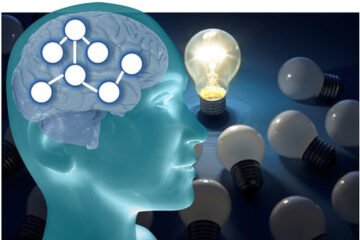
Metacognitive Integration is a dynamic process of exploration, identification, connection AND reconnection of the organismic self with it’s systemwide functions. It is a process that allows the individual to actualise themselves. This optimises the integration of their organism, to allow them to better thrive in the local environment.

The concept of “organisational incongruence” is a fascinating parallel to Carl Rogers’ theory of incongruence in individuals. Let’s break down the similarities and differences:

Gratitude, a profound and often underappreciated emotion, holds the power to transform our present mindset and influence our future outlook.