
Human Symbolic Interface
Social intuitionist theory
The social intuitionist theory, primarily developed by Jonathan Haidt, posits that moral judgments are driven by rapid, automatic intuitions rather than conscious, rational reasoning
The social intuitionist theory, primarily developed by Jonathan Haidt, posits that moral judgments are driven by rapid, automatic intuitions rather than conscious, rational reasoning
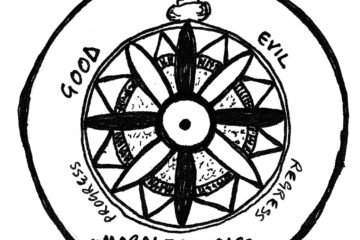
Kohlberg’s theory of moral development proposes that moral reasoning progresses through six stages, grouped into three levels: pre-conventional, conventional, and post-conventional

Erik Erikson’s theory of psychosocial development outlines eight stages through which individuals progress from infancy to late adulthood, each characterized by a specific psychosocial crisis that must be resolved to achieve healthy personality development

Piaget’s theory of cognitive development proposes that children progress through four distinct stages of intellectual growth, each characterized by unique ways of thinking and understanding the world

Social interdependence theory is a foundational concept in social psychology that examines how individuals’ outcomes and behaviours are shaped by their interdependence with others in a group or relationship

Mary Dinsmore Ainsworth (née Salter, 1913–1999) was an American-Canadian developmental psychologist who made foundational contributions to the field of attachment theory. Born in Glendale, Ohio, Ainsworth spent most of her childhood in Toronto, Canada, and earned her BA, MA, and PhD in psychology from the University of Toronto

The Strange Situation experiment, developed by Mary Ainsworth in the late 1960s, revolutionized the study of attachment and laid the foundation for a systematic, observational method to assess the quality of infant-caregiver attachment

This article looks into the basic family relationship, as driven by our genetic need for connection, support, nurturing and protection. We then propose a typical dysfunctional scenario, based on parents that are avoidant of that connection. It proposes that this scenario will result in children that will include a scapegoat, who may well develop C-PTSD based Stockholm Syndrome, before they are old enough to verbalise their long-term abuse. It also introduces a new term – Puppy-dog Syndrome, to describe one of the observable behaviours of children that have had this childhood.

Pattern recognition is not just a cognitive process; it is the brain’s way of saying, “Hey, I’ve seen this before – probably!”. At its core, every pattern is symbolic, and every symbol is a pattern, whether it’s a face in a crowd, a melody from a few notes, or the uncanny resemblance between your boss and a grumpy badger.

Recent research has uncovered a potentially systematic gaslighting mechanism within the NHS, the National Health Service in the UK. This appears to show that NHS may be in breach of the Mental Capacity Act, and is, as such, showing itself to be a potentially narcissistic organisation.