
Art
Glossary of Hillmanian Thought: The First Ten Principles
This glossary is not arranged alphabetically. It unfolds conceptually. The sequence begins with soul, the perspective from which Hillman believes psychology should proceed. Part I of II
This glossary is not arranged alphabetically. It unfolds conceptually. The sequence begins with soul, the perspective from which Hillman believes psychology should proceed. Part I of II

James Hillman’s archetypal psychology presents the psyche as fundamentally plural, or or of multiple minds. Human beings do not possess only one psychological voice, value system or centre of intelligence.

The absolute democracy of the psyche is a constitutional arrangement in which every psychological part possesses equal sovereignty, every part governs its own proper domain, and no system-wide action can be authorised unless every participating authority consents.

James Hillman’s archetypal psychology and Richard Schwartz’s Internal Family Systems therapy appear, at first sight, to describe remarkably similar psychological worlds.
James Hillman’s archetypal psychology is easier to misunderstand than to apply. Its vocabulary – gods, soul, images, underworld, personification and psychological polytheism, can create the impression that the practitioner’s task is to identify mythological figures concealed inside dreams and symptoms.
James Hillman’s archetypal psychology arose from Carl Gustav Jung’s analytical psychology, but it should not be understood merely as a later version of Jungian theory. Hillman retained some of Jung’s most radical propositions while questioning the conceptual structure Jung had built around them.
Archetypal psychology is the school of psychological thought most closely associated with James Hillman. Emerging as a distinct movement during the early 1970s, it developed out of Carl Gustav Jung’s analytical psychology while also questioning several of Jung’s central assumptions.
James Hillman was an American psychologist, Jungian analyst, writer, teacher and cultural critic whose work challenged many of the assumptions underlying twentieth-century psychology. He is principally associated with archetypal psychology, a post-Jungian approach that places imagination, metaphor, mythology and what Hillman called “soul” at the centre of psychological inquiry.
Could we use our intuition in order to embody ancestral archetypes, using keys hidden in our DNA?
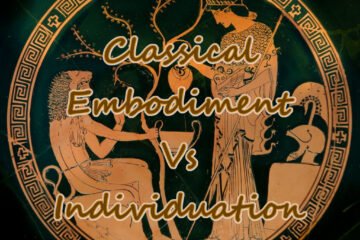
In Jungian terms, a deep, embodied relationship with a deity‑image could be seen as conscious ego and archetype entering into dialogue